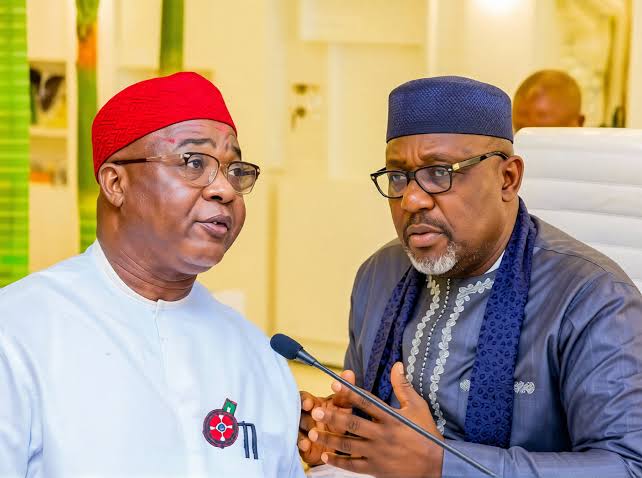
A fresh political storm is brewing in Imo State as former Governor Rochas Okorocha takes aim at his successor, Hope Uzodimma, questioning his political strength and grassroots appeal while unveiling plans for a cross-party alliance to secure President Bola Tinubu’s re-election in 2027.
Okorocha dismissed Uzodimma’s influence in the South-East as limited, arguing that the governor lacked the popularity and grassroots connections needed to mobilise the region behind a major political project. He also accused him of prioritising personal political ambitions over the responsibilities of governance.
The former governor’s criticism comes in the wake of a Federal High Court judgment nullifying Uzodimma’s nomination in the All Progressives Congress primary for the Imo West Senatorial District ahead of the 2027 general elections.
Speaking on a television programme on Thursday, Okorocha expressed confidence that his return to the electoral ballot would significantly improve Tinubu’s chances of winning Imo State in the 2027 presidential election.
He maintained that, unlike Uzodimma, he enjoyed considerable grassroots support across the state and could rally voters behind the President’s re-election bid.
In what could reshape political alliances in the South-East, Okorocha announced plans to establish a broad-based platform known as the Rainbow Coalition, bringing together politicians and supporters from different parties to campaign for Tinubu.
The proposed coalition, he explained, would accommodate members of various political parties, including the Peoples Democratic Party, united by a common political objective rather than party loyalty. He drew parallels with the alliance-building approach associated with Minister of the Federal Capital Territory, Nyesom Wike.
Okorocha also questioned Uzodimma’s senatorial ambition, arguing that seeking election to the Senate while still serving as governor raised constitutional and ethical concerns. He pointed out that the governor’s tenure is expected to run until January 2028.
He further suggested that the legal dispute over the senatorial nomination involved broader questions about constitutional compliance and the validity of documents submitted by the rival camps.
On the debate surrounding a proposed single four-year presidential tenure, recently championed by former Anambra State Governor Peter Obi, Okorocha expressed reservations, describing the idea as a political gamble.
While acknowledging Obi’s political standing and competence, he argued that supporting Tinubu’s re-election offered the South-East a more strategic path towards securing political goodwill and reciprocal support in the future.
Okorocha’s intervention adds another layer to the growing political contest ahead of 2027, as rival interests in the South-East manoeuvre for influence, forge alliances and stake competing claims to the region’s political support.