Venezuela’s Ruling Party Claims Sweeping Election Victory Amid Opposition Boycott

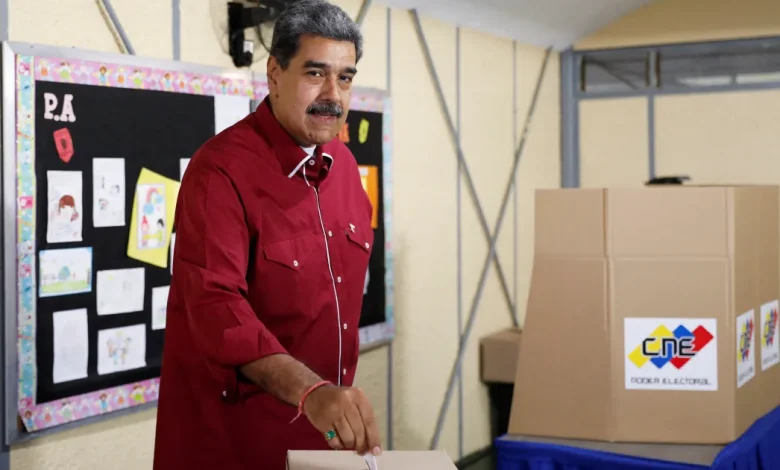
Venezuela’s ruling United Socialist Party of Venezuela (PSUV) has declared a decisive victory in Sunday’s regional and parliamentary elections, which were largely boycotted by opposition parties.
The National Electoral Council (CNE), widely seen as aligned with the government, announced that PSUV candidates secured the governorship in 23 of the country’s 24 states.
The CNE further reported that the ruling coalition captured an overwhelming 82.68% of the votes cast for the National Assembly, consolidating its dominant grip on Venezuela’s legislature.
Opposition leaders dismissed the polls as a “sham,” with prominent figure María Corina Machado claiming voter turnout was under 15%. “More than 85% of Venezuelans rejected this regime by not participating,” Machado asserted, highlighting widespread disenchantment with the electoral process.
Independent observers noted sparse crowds at polling stations throughout the day, far below participation levels seen in last year’s presidential election. In contrast, the CNE reported a turnout of 42.6%, a figure met with skepticism by opposition groups and international observers alike.
The opposition has long criticized the CNE’s impartiality, pointing to its leadership under Elvis Amoroso, a former legal adviser to President Nicolás Maduro. The council faced international condemnation last year after declaring Maduro the winner of the presidential election without releasing detailed voting data, raising questions about the election’s legitimacy.
Ahead of Sunday’s vote, opposition candidate Edmundo González, who claimed victory in unofficial tallies during the presidential race, fled to Spain amid a crackdown on dissent.
Machado, barred from running herself, remained in Venezuela and campaigned vigorously for a boycott, arguing that the legitimacy of July’s presidential election must be resolved before holding further polls.
Nevertheless, some opposition figures, including former presidential candidate Henrique Capriles and Zulia state governor Manuel Rosales, chose to participate.
Capriles described voting as “an act of resistance and resilience” in an interview with El País. However, their decision sparked fierce criticism from boycott advocates, who accused them of betraying the opposition cause.
With opposition turnout low, the PSUV expanded its gubernatorial control from 20 to 23 states, regaining key territories such as Zulia and Barinas — the latter being the political heartland of Maduro’s predecessor and mentor, Hugo Chávez. Only Cojedes remains under opposition leadership following the re-election of Alberto Galíndez.
The election was marred by a wave of arrests targeting opposition figures accused of plotting to disrupt the vote. Among those detained was Juan Pablo Guanipa, a close ally of Machado, whom the government labeled a “terrorist network leader.” Machado condemned the detentions as “state terrorism.”
In a controversial move, voters were also asked to elect representatives for the disputed Essequibo region, a territory administered by Guyana but claimed by Venezuela.
The International Court of Justice had ordered Venezuela to refrain from holding elections there, an order the Maduro government ignored. The vote, limited to a small district on Venezuela’s side of the border, carries only symbolic weight.
Neil Villamizar, a Maduro loyalist admiral, won the “governorship” of Essequibo despite having no authority over the area. Guyana’s President Irfaan Ali condemned the election as “scandalous” and “opportunistic,” vowing to defend his country’s sovereignty.
As Venezuela continues to grapple with political turmoil and economic hardship, the latest election results reinforce the ruling party’s grip on power amid persistent opposition challenges and international scrutiny.