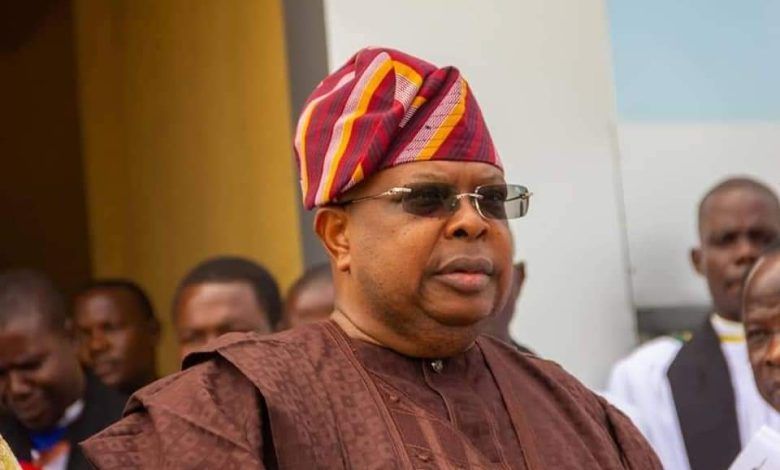
Power Minister Joseph Tegbe says procurement will begin soon, while a nationwide audit targets ageing transmission infrastructure and persistent faults across the electricity network…..
The Federal Government is planning to establish new eastern and western electricity grids as part of efforts to tackle Nigeria’s recurring national grid collapses and improve the stability of power supply.
The Minister of Power, Joseph Tegbe, disclosed this at an energy conference in Lagos, where he outlined measures being considered to address persistent weaknesses in the country’s transmission infrastructure.
According to the minister, the government is preparing to begin the procurement process for the proposed grids, with Nigerians expected to start seeing the impact of the projects within two to three years.
He explained that the initiative was part of a broader plan to strengthen the transmission network, improve its capacity and reduce the disruptions that have repeatedly left homes and businesses without electricity.
Beyond the proposed grid expansion, Tegbe revealed that a nationwide technical audit of electricity infrastructure was underway to determine the condition of existing facilities and identify the specific problems undermining the system.
He said the assessment would enable the government to establish the causes of infrastructure failures and direct investments towards areas where interventions are most urgently needed.
The minister stressed that the exercise would examine critical components of the transmission network, including transformers, conductors, relays, insulators and transmission towers.
He cautioned that replacing faulty equipment without first establishing the source of a problem could lead to wasteful spending while leaving the underlying cause of the failure unresolved.
Tegbe said the government expected to complete the audit within a few weeks, paving the way for targeted repairs, equipment replacement and other interventions based on the findings.
He also disclosed that the country had been divided into three energy zones to guide the government’s approach to improving electricity transmission, with priority given to areas experiencing the highest demand.
According to him, strengthening transmission along the Lagos and Abuja corridors could address a substantial part of the country’s electricity challenges because of the high concentration of demand in the two areas.
However, Tegbe noted that improving the efficiency of existing facilities alone would not be enough to resolve the sector’s longstanding problems, making additional transmission infrastructure necessary to support the wider electricity network.
He linked some of the difficulties to the age of existing facilities, pointing out that several transmission lines and electricity towers had remained in service for decades.
Some of the infrastructure, he said, dated back to the period when the Electricity Corporation of Nigeria (ECN) operated before the establishment of the National Electric Power Authority (NEPA).
The minister maintained that understanding the condition of these facilities was essential to determining which assets required repairs, which needed replacement and where new infrastructure should be constructed.
He said the government was working to establish the full extent of the problems before committing resources to specific solutions, rather than relying on interventions that might not address the underlying weaknesses.
The planned eastern and western grids, alongside the ongoing technical audit, are expected to form key parts of the government’s strategy to improve the resilience of Nigeria’s transmission network.
Tegbe expressed confidence that a combination of infrastructure expansion, targeted investment and a clearer understanding of existing faults would help improve the performance of the electricity system and deliver more reliable power supply across the country.