Trump Accuses Obama of ‘Treason’ in Escalating Rhetoric, Citing Disputed Intelligence Report

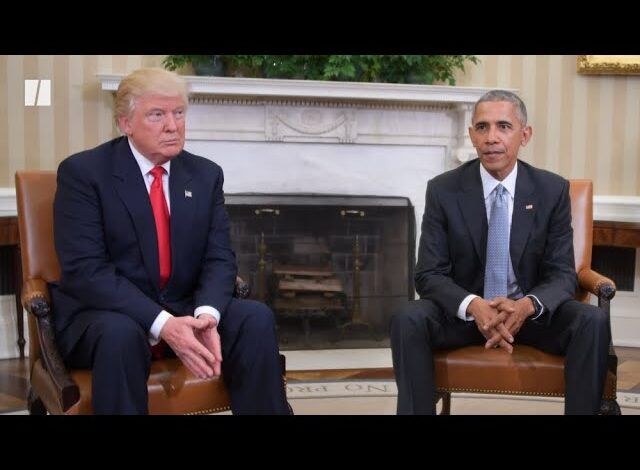
In one of his most incendiary public statements to date, U.S. President Donald Trump has accused his predecessor, Barack Obama, of “treason,” alleging a coordinated effort to undermine his presidency by linking him to Russian election interference.
“They tried to steal the election,” Trump said during a media exchange at the White House, claiming that the Obama administration orchestrated a campaign to delegitimize his 2016 victory over Hillary Clinton.
Trump’s remarks appear to reference a recent report from Director of National Intelligence Tulsi Gabbard, which alleges a “years-long coup” by Obama’s national security officials against Trump — a claim dismissed by Democrats and intelligence veterans as conspiratorial and unsubstantiated.
A spokesperson for Obama responded swiftly, calling the accusations “a weak attempt at distraction” as Trump grapples with renewed scrutiny over unrelated political controversies.
The timing of Trump’s comments has drawn particular attention, coming just as pressure mounts on his administration to release more information regarding the late Jeffrey Epstein — the convicted sex offender who died by suicide in federal custody in 2019 while awaiting trial.
Critics suggest that Trump’s treason accusation may be a calculated deflection.
“It’s a page from the classic playbook: create a media storm to bury something potentially damaging,” said media strategist Asha Rangappa, a former FBI special agent and legal analyst.
This isn’t the first time Trump has levied serious charges against Obama-era officials. Throughout his presidency, Trump accused former intelligence leaders of “spying” on his campaign, a theory largely discredited by multiple bipartisan investigations, including the Mueller Report and the Senate Intelligence Committee’s own findings, which found no evidence of a “deep state” conspiracy.
The accusation of treason — a crime punishable by death under U.S. law — is virtually unprecedented in modern American politics. Legal scholars quickly pushed back.
“Using a term like ‘treason’ casually, and without factual basis, is both legally irresponsible and politically dangerous,” said Caroline Fredrickson, former president of the American Constitution Society.
Democratic leaders have so far refrained from directly responding, likely to avoid amplifying Trump’s claims. But within policy circles, the statement has sparked concerns over Trump’s normalization of incendiary rhetoric ahead of the 2026 midterms and a potential 2028 presidential run.
Meanwhile, Trump’s base on social media quickly seized on the statement, echoing unfounded claims of a “deep state coup” — narratives that continue to thrive in far-right media ecosystems.