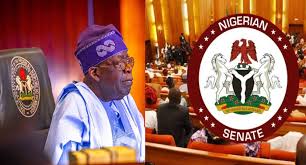
A fresh wave of legislative reforms is underway as President Bola Tinubu transmits a series of bills to the Senate, seeking to strengthen drug law enforcement, overhaul safety investigation and establish a National School of Government.
The bills, conveyed to the Senate President, Godswill Akpabio, are to be considered in line with the provisions of the 1999 Constitution, as amended.
Among the proposals is the NDLEA Bill 2026, which seeks to establish a consolidated legal framework for the operations of the National Drug Law Enforcement Agency. The proposed legislation is expected to strengthen the agency’s powers, including its capacity to investigate persons suspected of involvement in illicit drug-related activities.
Also transmitted is the Nigerian Safety Investigation Bureau Amendment Bill 2026, which seeks to amend the existing 2022 Act, strengthen the bureau’s independence and expand its mandate. The proposal also provides for changes to its administrative structure and the transfer of supervisory oversight to the Presidency.
In another major reform, President Tinubu has forwarded the National School of Government Bill 2026, which seeks to repeal the Administrative Staff College of Nigeria Act and establish a National School of Government.
The proposed institution is expected to serve as a national centre for governance training, public sector capacity development and institutional strengthening.
Beyond these institutional reforms, the President has also transmitted a bill seeking to domesticate the four Geneva Conventions of 1949 and their two Additional Protocols of 1977, which establish protections for victims of armed conflict.
The proposal also seeks to domesticate the Rome Statute of the International Criminal Court, which provides the legal framework for the prosecution of individuals accused of genocide, crimes against humanity, war crimes and the crime of aggression.
The bills will now be subject to legislative consideration and the relevant processes of the National Assembly.