Cardoso attributes reserve build-up to CBN reforms, disciplined management and stronger diaspora inflows…
Nigeria’s foreign exchange reserves have risen above the $55 billion mark, reaching their highest level in more than 18 years, the Central Bank of Nigeria has announced.
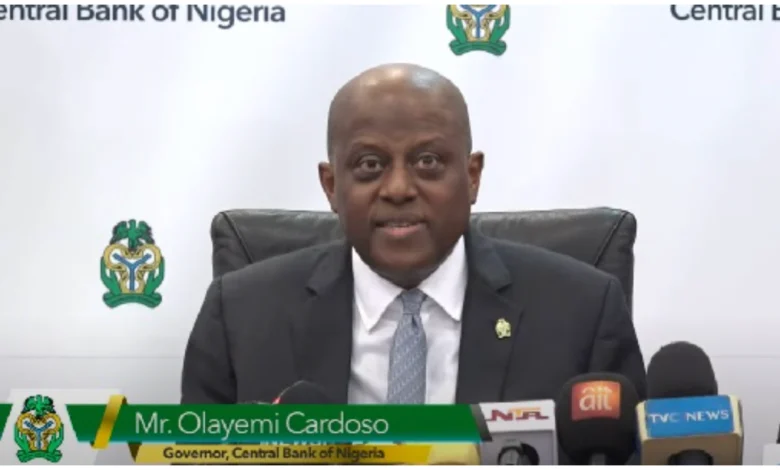
CBN Governor Olayemi Cardoso disclosed the development on Tuesday during a briefing in Abuja following the 307th meeting of the Monetary Policy Committee.
The reserve milestone came as the apex bank outlined recent developments in the foreign exchange market and announced changes to its monetary policy operating framework.
Cardoso attributed the steady accumulation of reserves to what he described as consistency and discipline in the CBN’s approach, while also pointing to increased contributions from Nigerians living abroad.
He said the latest position represented a significant improvement in the country’s external buffers.
“We have been able to rebuild our reserves. We know that today, the reserves have crossed US$55 billion – the highest number in over 18 years,” Cardoso said, adding that the progress had been supported by consistency, discipline and diaspora contributions.
The latest figure builds on the reserve increase recorded earlier in September. The country’s reserves had crossed $54 billion by September 3, according to previous reports, before moving further above the $55 billion threshold.
CBN points to changes in the FX market
Cardoso also used the briefing to highlight changes in Nigeria’s foreign exchange market, particularly the reduction in the gap between previously divergent exchange rates.
He contrasted the current market with the system that existed before the CBN’s recent reforms, when different categories of users could access foreign exchange at different rates.
According to the governor, access to the market under the previous arrangement could depend on an individual’s connections and the particular rate available to them.
He said the reforms had helped narrow those disparities and create a more uniform market structure.
“What has happened is that we have succeeded in closing that gap. It is not fair for some people to profit at the expense of others,” Cardoso said.
The CBN governor also put the cost associated with the former subsidy arrangements at about 2.2 percent of Nigeria’s gross domestic product, describing the figure as substantial.
“The losses of these ‘subsidies’ were in the region of 2.2% of the GDP. And that is staggering,” he said.
MPC changes monetary policy framework
The reserve announcement came alongside a major adjustment to the CBN’s monetary policy operations.
At its 307th meeting, the Monetary Policy Committee recalibrated the asymmetric corridor around the Monetary Policy Rate to plus 50 and minus 300 basis points.
Cardoso said the adjustment should not be interpreted as a change in the committee’s current policy stance.
Instead, he described it as an operational reset designed to make the transmission of monetary policy more effective and support the CBN’s transition towards an inflation-targeting framework.
“The MPC emphasized that the recalibration of the corridor does not constitute a change in the current monetary policy stance, but rather an operational reset to enhance the effectiveness of monetary policy and support the transition to an inflation targeting framework,” he said.
He added that the committee considered the reset necessary to bring the implementation of monetary policy more closely in line with prevailing market conditions.
The MPC also retained the Cash Reserve Requirement at 45 percent for Deposit Money Banks and 16 percent for Merchant Banks.
The 75 percent CRR requirement on non-Treasury Single Account public-sector deposits was also maintained.
According to Cardoso, the changes are expected to improve monetary policy transmission and reinforce the MPR as the CBN’s main policy signal.
CBN cuts benchmark interest rate
The latest policy decisions also included a reduction in the Monetary Policy Rate from 26.5 percent to 23 percent, a 350-basis-point cut announced at the same MPC meeting.
The decision marked a significant adjustment after the committee had maintained the benchmark rate at its previous two meetings.
The CBN said the recalibration of its operating framework was aimed at improving how policy decisions influence financial conditions across the economy.
Reserves surpass earlier 2026 projection
The latest reserve figure also places Nigeria’s external buffers above the level previously projected by the CBN for the full year.
Earlier projections had put Nigeria’s reserves at approximately $51.04 billion by the end of 2026, meaning the latest position has already moved beyond that level.
The increase in reserves has been accompanied by the CBN’s broader foreign exchange reforms, including efforts to improve transparency and reduce opportunities for arbitrage in the market.
The apex bank has previously said its reforms were intended to strengthen the credibility of the FX market, improve investor confidence and support a more market-driven foreign exchange framework.
With reserves now above $55 billion, the CBN is presenting the development alongside its exchange-rate and monetary-policy reforms as part of its broader effort to strengthen Nigeria’s external position and improve the functioning of the financial system.