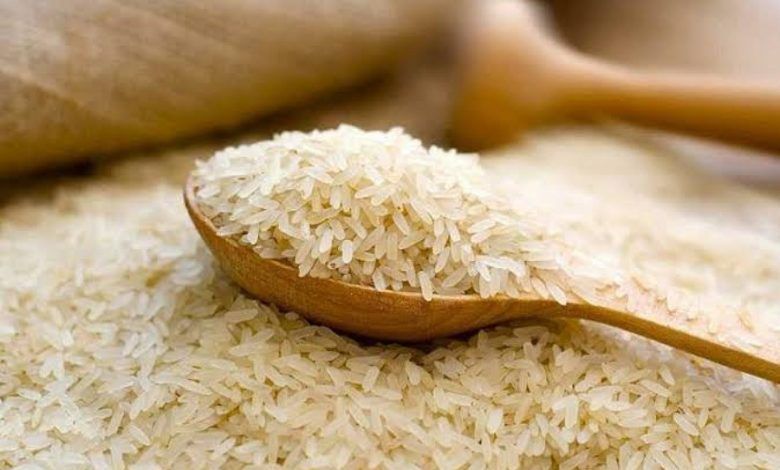
Government seeks better data, lower production costs and coordinated trade policies to strengthen Nigeria’s rice value chain….
The Federal Government has opened a fresh consultation with key players in Nigeria’s rice industry as it seeks to address the rising cost of production and improve the affordability of the staple for consumers.
The meeting brought together representatives of federal and state institutions, farmers, millers and other stakeholders in the rice value chain for technical discussions on production, investment, market conditions and consumer prices.
The consultation was disclosed in a joint statement issued by the Presidential Food Systems Coordinating Unit, PFSCU, and the Federal Ministry of Finance and shared with Nairametrics on Tuesday night.
It forms part of President Bola Ahmed Tinubu’s broader directive to strengthen food security, increase domestic production, improve farmers’ livelihoods, attract private investment and ensure that food remains within the reach of consumers.
The session was chaired by the Minister of Finance, Taiwo Oyedele, who was represented by the Director of Technical Services, Bashir Abdukadir. The Executive Secretary of PFSCU, Marion Moon, served as assistant chair.
A major focus of the discussions was the need for a more coordinated system for tracking Nigeria’s food market.
The government said such a framework should capture information on rice production, available stocks, imports, consumption patterns and prices, while also improving food-safety controls, traceability, certification and testing.
According to the joint statement, better data would enable policymakers to respond more quickly to changes in the market, while helping to protect investments by farmers and processors and improve the competitiveness of the domestic rice industry.
Stakeholders also examined the broader factors driving the cost of rice, including production expenses, financing, energy, irrigation, storage, logistics and market access.
Production costs emerge as major concern
Participants identified the high cost of producing rice as one of the biggest challenges facing the industry.
The consultation heard that producing rice currently costs between N2.2 million and N2.3 million per hectare, with fertiliser alone accounting for about 35 percent of total production costs.
High energy and irrigation expenses were also identified as significant pressures on farmers and processors, alongside limited access to affordable long-term financing.
Post-harvest losses and inadequate storage and aggregation facilities were highlighted as additional constraints affecting the efficiency of the value chain.
To address some of these challenges, stakeholders called for increased investment in irrigation infrastructure, including solar-powered water systems that could support production throughout the year.
They also advocated stronger financing and refinancing arrangements for viable rice mills and processors, as well as improved storage and aggregation facilities.
Reducing production and transportation costs, they said, would also be critical to improving the competitiveness of locally produced rice.
Stakeholders seek predictable trade policies
The meeting also turned attention to Nigeria’s management of domestic food supply, strategic reserves, imports and exports.
Participants called for greater coordination among government agencies and industry players to ensure that trade and import decisions take into account domestic production cycles.
They warned that significant differences between local and imported rice prices could create incentives for smuggling when policies and market conditions are not properly aligned.
The Rice Farmers Association of Nigeria, RIFAN, welcomed the continued engagement between the government and participants across the value chain.
Its Vice President, Mohammed Auwalu, said sustained consultation would help improve coordination between policymakers and those directly involved in rice production and processing.
The government said the outcome of the consultation would be compiled into a technical report outlining the current state of Nigeria’s rice value chain and identifying priority measures for strengthening the sector.
Government links rice strategy to food inflation
The rice consultation is part of the Federal Government’s wider efforts to boost domestic food production and encourage greater consumption of locally produced goods.
The move also comes against the backdrop of a broader moderation in food inflation.
According to the National Bureau of Statistics, Nigeria’s headline inflation rate fell to 18.02 percent in September 2025 from 20.12 percent in August.
Food inflation stood at 16.87 percent year-on-year in September 2025, down significantly from the 37.77 percent recorded in September 2024.
With rice remaining a major component of household food consumption, the government is now seeking to address the pressures across the entire value chain from farm inputs and production to processing, storage, transportation and retail rather than focusing solely on the final price paid by consumers.