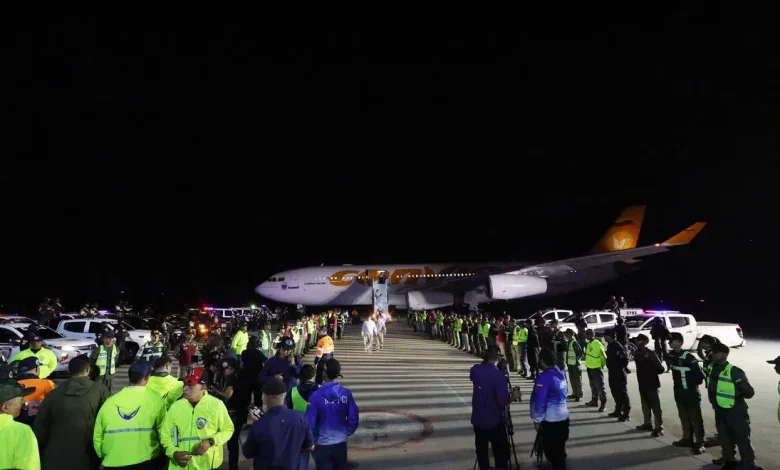
Liberia has received the first group of people deported by the United States under a new agreement allowing Washington to send certain third-country nationals to the West African country.
Liberia’s Information Minister, Jerolinmek Piah, said most of those arriving are from Latin American countries, including Venezuela, Cuba and Colombia.
The development follows Liberia’s announcement earlier this week that it had agreed to accept up to 1,200 third-country deportees from the United States over the next 12 months.
The arrangement is part of the Trump administration’s broader effort to expand deportations by securing agreements with countries willing to receive migrants who are not their own nationals.
Liberian authorities had previously said the deportees would come from countries in Africa and the Western Hemisphere but did not provide details about their nationalities.
The first deportation flight arrived in Liberia on Thursday, marking the start of the new arrangement and placing the country among a growing number of African states involved in Washington’s expanded deportation programme.
Piah said international organisations, including the International Organization for Migration and the United Nations refugee agency, would assist with services for the deportees, following arrangements used in similar programmes elsewhere on the continent.
The agreement comes as the United States intensifies its immigration enforcement efforts, with the Trump administration making deportations a central part of its immigration policy.
For Liberia, the arrangement represents a significant humanitarian and diplomatic undertaking, particularly as authorities prepare to receive people with no prior connection to the country.
The government is expected to work with international partners on accommodation, documentation, welfare and other support services as the programme develops.
The agreement also adds Liberia to a growing list of African countries cooperating with the United States on the reception of deportees, amid continuing international debate over the legal, humanitarian and logistical implications of sending migrants to third countries.