Lagos State is targeting 40 per cent food self-sufficiency, up from 20 per cent, through increased agricultural production, improved food distribution and strategic partnerships.
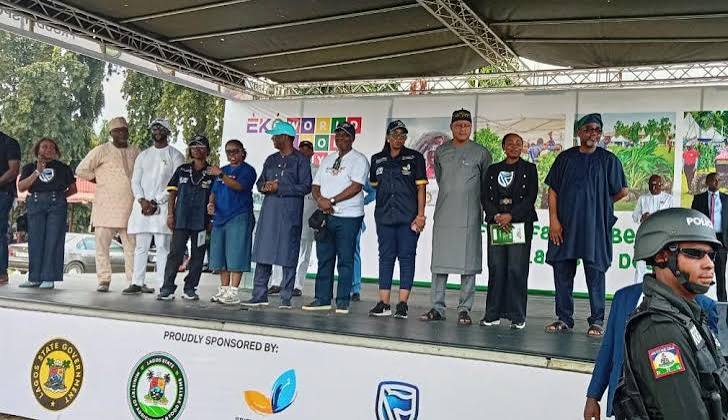
Governor Babajide Sanwo-Olu announced this on Friday through his deputy, Dr Obafemi Hamzat, at the 2026 World Food Day celebration at the Nigeria Police College, Ikeja.
He said Lagos, with a population exceeding 22 million and limited landmass, must boost productivity, strengthen supply chains, expand food processing and reduce waste to meet its food needs.
Sanwo-Olu said the state’s Five-Year Agricultural and Food Systems Roadmap would drive the target through investments in infrastructure, production, skills development and innovation.
He disclosed that the first phase of the central food security and logistics hub at Ketu-Ereyun, Epe, was at an advanced stage, while mid-level hubs at Abijo in Ibeju-Lekki and Dairy Farm in Agege had been commissioned.
The governor added that the Produce for Lagos Programme was linking farmers to guaranteed markets following the launch of a N500 billion Guarantee Offtake Fund.
On agricultural production, he said the Lagos Rice Mill in Imota had an annual capacity of 2.5 million 50-kilogramme bags, created over 2,000 jobs and supported 500 farmers. The Eko Agro Mechanisation Programme had also facilitated the cultivation of more than 3,000 hectares for 6,000 farmers.
He added that the state’s cattle feedlot project in Epe was expected to handle over 100,000 cattle annually, while fresh milk production had commenced at a pilot dairy farm in Badagry.
The Lagos Aquaculture Centre of Excellence in Epe is projected to produce 50 million fingerlings and 2,000 tonnes of fish annually.
Sanwo-Olu also said the Lagos Agripreneurship Programme had trained over 4,400 youths and women, with more than 2,000 beneficiaries receiving support for their agricultural businesses. He announced a N200 million commitment to Lagos Agrithon 3.0 and said 5,000 farmers had benefited from a 25 per cent subsidy under the Ounje Eko Farmers Subsidy Programme.
The governor urged stakeholders to embrace innovation, strengthen partnerships, reduce post-harvest losses and promote affordable, nutritious and sustainable food.
Earlier, the Commissioner for Agriculture and Food Systems, Abisola Olusanya, said the state had invested in agricultural infrastructure, processing, distribution and farmer support over the past seven and a half years.
She highlighted initiatives in rice milling, dairy production, aquaculture and food logistics, adding that the state planned to extend the consumption of locally produced fresh milk to schools.