
France Locks Down: Macron Bans Fresh Protests After Week of Fire and Chaos

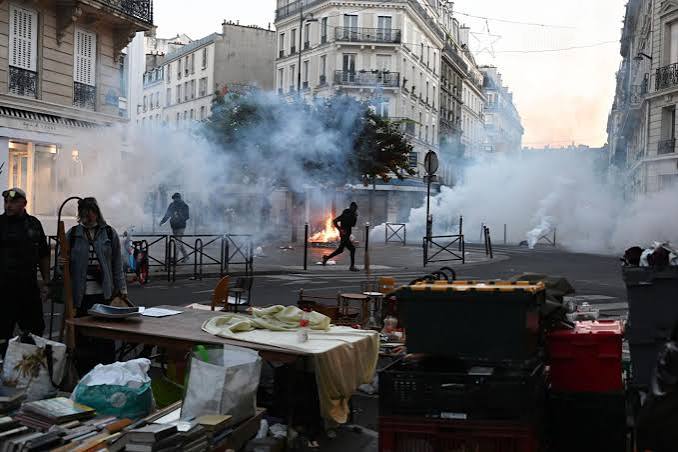
France has moved to shut down fresh waves of street protests after last weekend’s cost-of-living demonstrations spiraled into the worst civil unrest the country has seen in years.
After chairing an emergency security meeting with key ministers and intelligence chiefs on Thursday, President Emmanuel Macron announced sweeping new measures including targeted curfews and a ban on what the presidency described as illegitimate protest groups.
The priority, according to the presidency, is a return to calm, with a full defence council scheduled for Friday to map out the state’s response to new nationwide demonstrations called for Saturday.
The government is still reeling from October 17, when mass marches that drew more than half a million people nationwide over soaring prices and deteriorating school conditions degenerated into extreme violence.
Masked groups clashed with police, looted up to 300 shops in Lyon alone, and set fire to historic public buildings including the 19th-century town hall in Limoges and the tourist office in Lyon.
Macron has placed the blame squarely on organized elements of the ultra-left, accusing them of orchestrating seditious acts designed to bring down the Republic.
The fallout has been severe. The Interior Ministry said at least 2,400 to 2,700 people have been arrested since the weekend, with over 200 already jailed and 1,000 more facing prosecution. Nearly 1,000 police officers were injured in the clashes.
Admitting that police lost control, Prime Minister Sebastien Lecornu on Monday ordered partial curfews in Paris, Lyon, Lille, Bordeaux and Nice, with more police to be deployed this Saturday — 20 percent more than last weekend. A state of emergency was considered but not yet declared.
The crackdown is already reshaping the map of protest in France:
In Paris, police banned marches from entering the city centre, confining Saturday’s rally to the east, starting from Bastille. A separate overnight curfew and demonstration ban was imposed around Place de la Republique and Les Halles, a shopping hub heavily looted last weekend. Landmarks including the Elysee, parliament, the Louvre and the Champs-Elysees are now off-limits for protesters.
In Lyon, France’s third-largest city, authorities announced a total ban on all protests on Saturday after describing last weekend as hours of pure chaos.
Similar city-centre bans have been issued in Grenoble, Rouen, Le Havre, Toulon and Nice.
The move has triggered legal pushback. A student-led protest in Paris on Thursday went ahead after an emergency court overturned a police ban, with organizers accusing the government of trying to sort protesters into good and bad categories and undermining the constitutional right to demonstrate.
The Yellow Vest movement, which helped organize the rallies alongside unions, has refused to accept the alternative routes offered by prefects.
While unions may be offered approved routes, non-union groups will be banned wherever possible, the president said.
The political price is rising fast, just six months before France elects Macron’s successor. Art Basel Paris, the capital’s biggest art fair, announced it would close two days early, while the government scrambles to restore order and reassure markets that chaos will not take hold.


