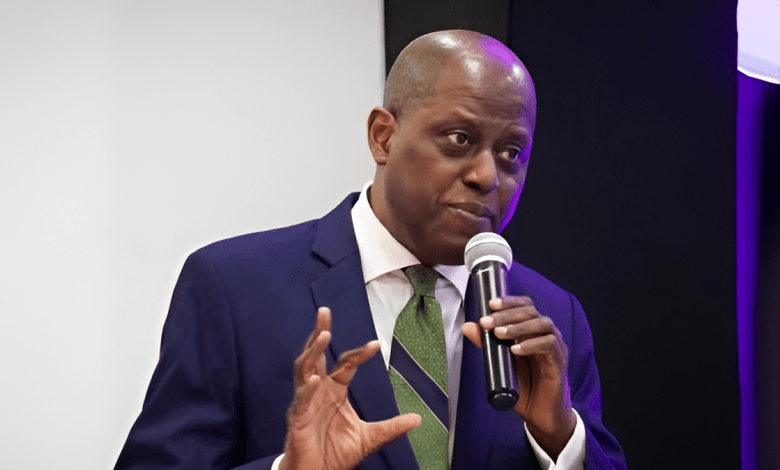
Cardoso urges fintech firms to design financial products around accessibility gaps as regulator pushes broader inclusion…..
Nigeria’s financial technology industry could be overlooking a market of about 40 million people, according to the Central Bank of Nigeria, which says Nigerians living with disabilities remain significantly underserved by existing financial services.
CBN Governor Olayemi Cardoso, represented by Abiodun Olalekan Okunola, Head of the Innovation Management Division at the apex bank, highlighted the gap at Nigeria Fintech Week 2026 in Lagos.
Cardoso said financial institutions and technology providers had not done enough to develop products and services specifically designed around the needs of persons living with disabilities.
He urged fintech companies to look beyond existing products and develop solutions that make banking and other financial services more accessible to the group.
The governor said the CBN’s engagement with the National Agency for Persons with Disabilities had exposed several shortcomings in the way the financial system serves people living with disabilities.
“Many people may not know that there are about 40 million Nigerians that are persons living with disability. Our financial system, we have not innovated to take care of them,” he said.
Cardoso said the barriers facing people with disabilities are not limited to the technology used to access financial services.
He pointed to the experience of visually impaired customers who may have substantial funds in their accounts but encounter difficulties when they visit a bank.
“Blind people have money in their accounts. They go to the bank. When they get to the bank teller, the first thing they see is somebody coming to beg, even if that person has N20 million in their account, they do not treat them well,” he said.
The governor said financial institutions therefore need to pay greater attention to how their employees interact with customers living with disabilities.
He called for better staff training to ensure that people with disabilities receive appropriate and respectful treatment when accessing financial services.
Cardoso also identified challenges with biometric systems that rely primarily on fingerprints.
He cited people affected by leprosy who may not be able to use fingerprint-based identification, saying financial institutions need to provide alternative methods of verifying their identities.
“They don’t have fingerprints. So what that means is that we also must innovate so that perhaps we start using their, you know, irises or something to do identity,” he said.
Beyond the financial inclusion challenge, Cardoso said the scale of the underserved population could create a significant commercial opportunity for fintech companies capable of developing appropriate solutions.
“So 40 million people excluded, not having targeted technological solutions to meet their needs. I’m sure you’re thinking already, there’s a lot of money to be made there,” he said.
He encouraged fintech operators to examine the specific financial challenges faced by persons with disabilities and develop products that respond directly to those needs.
Cardoso described exclusion as the third major “brake” that must be addressed in the financial system, following fragmentation and a deficit of trust.
The comments come amid wider efforts by financial institutions and regulators to expand access to formal financial services among underserved populations.
In September 2025, FirstBank announced plans to develop tailored financial services for blind, partially sighted and physically challenged customers.
The CBN has also been pursuing broader financial inclusion through digital payments and fintech development.
In June 2026, the apex bank said its Payment System Vision 2028 was targeting a 95 per cent financial inclusion rate among the adult population by 2028, a goal that could bring an additional 50 million Nigerians into the formal financial system.