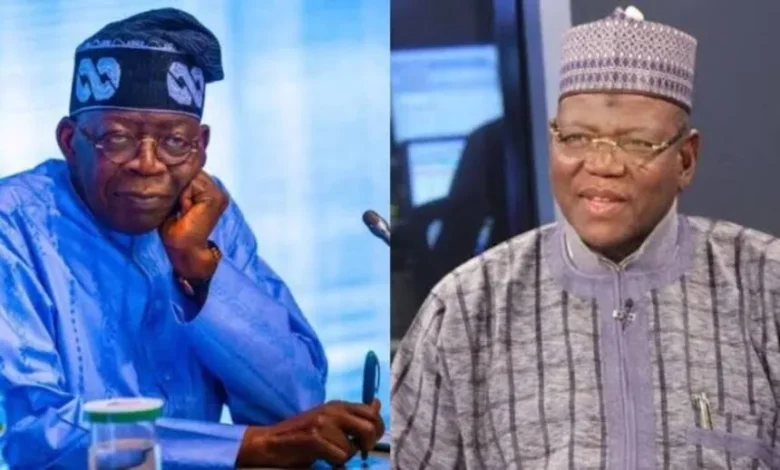
Former Governor of Jigawa State, Sule Lamido, has called on President Bola Ahmed Tinubu to compensate the family of the late Chief Moshood Kashimawo Abiola with ₦45 billion as restitution for the annulled June 12, 1993 presidential election — a contest widely regarded as the freest and fairest in Nigeria’s history.
Lamido made the appeal on Tuesday during the official unveiling of his autobiography, Being True to Myself, held in Abuja. He argued that such a financial gesture would not only symbolize justice and reconciliation but also bring moral closure to one of Nigeria’s most painful democratic betrayals.
“I want to appeal to President Tinubu to finally close the chapter of June 12. The late Abiola was not only denied his mandate but also his rightful financial entitlements,” Lamido said.
Lamido’s remarks were anchored on revelations from former military president General Ibrahim Babangida’s recently published memoir, A Journey in Service. In the book, Babangida for the first time publicly admitted that Abiola won the 1993 election but said the decision to annul it stemmed from fears of a potential military coup and national instability.
According to Babangida, Abiola — the candidate of the Social Democratic Party (SDP) — polled 8,128,720 votes, defeating Bashir Tofa of the National Republican Convention (NRC), who garnered 5,848,247 votes.
Lamido cited a private conversation with Babangida, during which the former head of state acknowledged that Abiola was owed ₦45 billion, and stated that, were he president, he would have paid the sum as restitution.
“He [Babangida] told me himself — that Abiola is owed ₦45 billion. He was denied his presidency and his money. It’s double punishment,” Lamido emphasized. “Let President Tinubu right this wrong. Pay this money. It’s important for history, and for healing.”
The call reignites national debate over the unresolved legacy of June 12 — a date that has become synonymous with Nigeria’s struggle for democracy. In 2018, former President Muhammadu Buhari posthumously awarded Abiola the Grand Commander of the Federal Republic (GCFR), the country’s highest national honour, and declared June 12 as Nigeria’s official Democracy Day.
While some Nigerians, including civil society groups, welcomed Babangida’s belated confession, others criticised the memoir as an attempt to dodge accountability, noting that the annulment plunged the country into a prolonged period of political turmoil.
President Tinubu, one of the key figures in the pro-democracy movement of the 1990s, has not officially responded to Lamido’s appeal. However, observers note that Tinubu’s presidency presents a unique opportunity to resolve longstanding grievances tied to the June 12 saga — a cause that helped define his early political activism.
Lamido’s emotional appeal adds another voice to growing calls for restorative justice, not just in honour of Abiola’s legacy, but to signal a national reckoning with Nigeria’s democratic past.