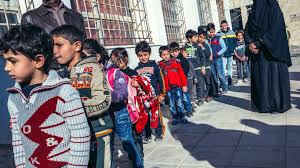
A global network of journalists focused on early childhood development in emergency settings has issued a strong call for urgent global action to address the plight of millions of young children caught in humanitarian crises around the world.
The group, known as the Reporters for Early Age Children in Humanitarian Crisis (REACH) Network, made the appeal in a communiqué released on May 16, following its second virtual meeting hosted by the Moving Minds Alliance.
The REACH Network is a collective of journalists committed to raising awareness and advocating for better care and support for young children and their caregivers affected by emergencies, displacement, and conflict through impactful storytelling and reporting.
In the communiqué, signed by Mojeed Alabi, Co-chair of the REACH Network, the group warned that nearly two billion children aged 0–14 are living in environments that threaten their health, development, and fundamental rights.
“UNICEF has emphasized that for babies and young children living in humanitarian settings, access to early childhood services can be the difference between life and death,” the statement noted. “It is imperative that we act swiftly to protect and uphold the rights of these children.”
The communiqué spotlighted several countries India, Jordan, Uganda, Nigeria, and Cameroon as examples of regions where children face severe developmental challenges due to ongoing crises.
Focusing on India, the network highlighted that over one-third of the country’s population is under 18, yet extreme weather events and natural disasters are significantly hindering progress in early childhood development (ECD). India experienced three major cyclones in 2023 and four in 2024, with 37 cities recording temperatures above 45°C last year. As a result, more than 2.4 million children were left in urgent need of support and services.
The REACH Network urged governments, humanitarian agencies, and the media to prioritise early childhood care in crisis responses, warning that neglecting this age group today could lead to irreversible consequences for future generations.