Hakainde Hichilema Secures Second Term as Zambia’s President Amid Opposition Concerns

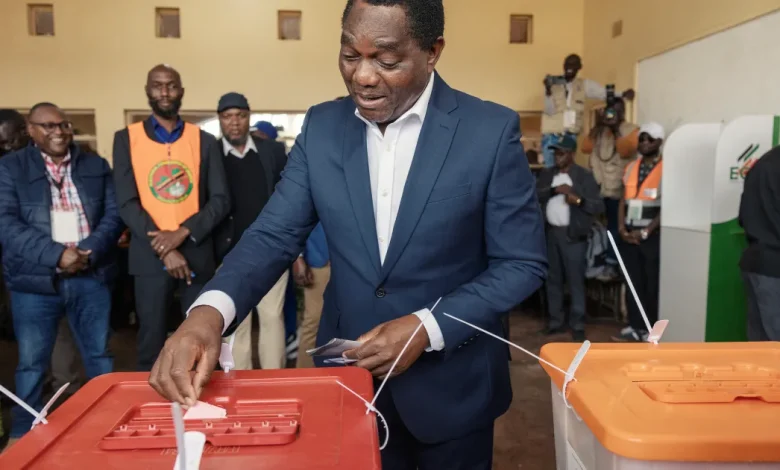
President Hakainde Hichilema has won re-election for a second five-year term, securing a decisive victory in Zambia’s closely watched presidential election, according to official results released by the Electoral Commission of Zambia early Tuesday.
Hichilema, 64, won approximately 60 percent of the vote, defeating his main challenger, opposition leader Brian Mundubile, who secured about 38 percent.
The result gives Hichilema another mandate to lead the copper-rich southern African nation after his first victory in 2021.
The outcome, however, comes against a backdrop of a fiercely contested campaign and growing concerns over Zambia’s political environment. While voting itself was largely peaceful, the election period was overshadowed by allegations from opposition groups of intimidation, restrictions on political activity and the arrest of several opposition figures. The government has rejected accusations that it is deliberately suppressing its political opponents.
Tensions intensified after police arrested several senior opposition figures around election night, citing alleged threats to national security.
The arrests followed a security incident that included gunfire, while vote counting was temporarily suspended after election officials were attacked and ballot papers were reportedly stolen. Opposition figures have disputed the government’s allegations and raised concerns about the integrity of the process.
Despite the controversy, Hichilema’s victory represents a strong electoral mandate. Supporters of his United Party for National Development (UPND) celebrated across Lusaka following the announcement, with crowds taking to the streets in a festive atmosphere.
The president now faces the challenge of turning his electoral victory into tangible improvements in the lives of ordinary Zambians. His first term was marked by significant progress in restructuring Zambia’s debt, strengthening relations with international lenders and attracting investment, particularly in the country’s strategically important copper industry.
Yet economic challenges remain. High living costs, unemployment, electricity shortages and concerns over whether the benefits of Zambia’s growing copper sector are reaching ordinary citizens were central issues during the campaign. Reuters reported that Hichilema’s re-election provides investors with policy continuity, while placing greater pressure on his administration to move from economic stabilisation toward stronger, broader-based growth.
Hichilema’s second term is therefore likely to be judged not only by the continued recovery of Zambia’s economy, but also by his government’s handling of democratic institutions, political freedoms and relations with the opposition.
The Electoral Commission is expected to publish the official final results by August 24, after which Hichilema is due to be sworn in, provided the results are not successfully challenged.
His re-election gives him five more years to pursue his economic agenda — but also places greater expectations on his government to translate economic reforms and Zambia’s vast mineral wealth into jobs, lower living costs and improved living standards for citizens across the country.
Hichilema has won the election. His second term, however, will now be defined by what he does with the mandate.