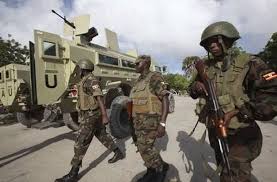
After almost two decades on the frontline of Somalia’s battle against Islamist militants, Uganda has begun pulling its troops out of the Horn of Africa nation, signalling a major shift in a military partnership that has shaped the country’s security landscape since 2007.
Uganda’s acting army spokesperson, Chris Magezi, confirmed on Monday that the first batch of soldiers deployed under a bilateral security arrangement had returned home, with additional troops expected to follow in the coming days.
He disclosed that the withdrawal would take place in phases, with all Ugandan forces, including personnel serving under the African Union (AU) mission, expected to leave Somalia by the end of 2027.
The initial withdrawal reportedly involved 109 soldiers of the Uganda People’s Defence Forces (UPDF), who departed Mogadishu on Friday following an announcement by Uganda’s army chief, General Muhoozi Kainerugaba.
Last week, Kainerugaba confirmed that Kampala had commenced the withdrawal process, explaining that Uganda was preparing to transfer security responsibilities to Somali forces after years of military engagement.
Magezi said the move would bring Uganda’s military operations in Somalia to an end, allowing the Somali government to assume full responsibility for securing its territory.
Uganda’s involvement in Somalia dates back to 2007, when it became the first African country to deploy troops under the African Union Mission in Somalia (AMISOM). The mission was established to protect the country’s transitional government and help repel attacks by Islamist militant groups, particularly al-Shabaab.
Over the years, Ugandan forces played a significant role in military operations that pushed al-Shabaab out of Mogadishu and several other strategic locations. They also worked alongside the Somali National Army to reclaim territory and protect critical government installations.
The withdrawal follows a recent meeting between Somali President Sheikh Mohamud and Ugandan President Yoweri Museveni in Kampala, where discussions focused on Somalia’s security challenges, as well as trade and economic cooperation.
Reports indicated that Mohamud sought to convince Uganda to maintain its military presence in Somalia, although no official outcome of the request was disclosed.
During the visit, Museveni urged Somali authorities and citizens to strengthen national unity and intensify efforts against the al-Shabaab insurgency, which has continued to threaten security across the country.
An estimated 4,500 soldiers currently serve under the African Union mission in Somalia, while approximately 2,000 additional troops operate through bilateral security arrangements.
Uganda’s military engagement continued through successive African Union operations, including the African Union Transition Mission in Somalia (ATMIS), which was designed to gradually transfer security responsibilities to Somali forces.
ATMIS was replaced in 2025 by the African Union Support and Stabilisation Mission in Somalia (AUSSOM), which focuses on strengthening the country’s security institutions and preparing its military to independently defend the nation.
However, the future of the latest AU mission remains uncertain amid concerns over funding, particularly following plans to reduce American and United Nations support.
A 12-month transition arrangement is expected to commence in January, providing Somalia and the African Union with time to explore alternative funding sources and address the financial challenges confronting the mission.
Uganda’s planned exit therefore represents a significant test for Somalia’s security forces, which must now demonstrate their ability to contain al-Shabaab and sustain the gains achieved through years of international military support.