Nigeria says it will adopt lessons from Ethiopia’s approach to nutrition financing, government coordination and community-based interventions to strengthen efforts to combat malnutrition across the country.
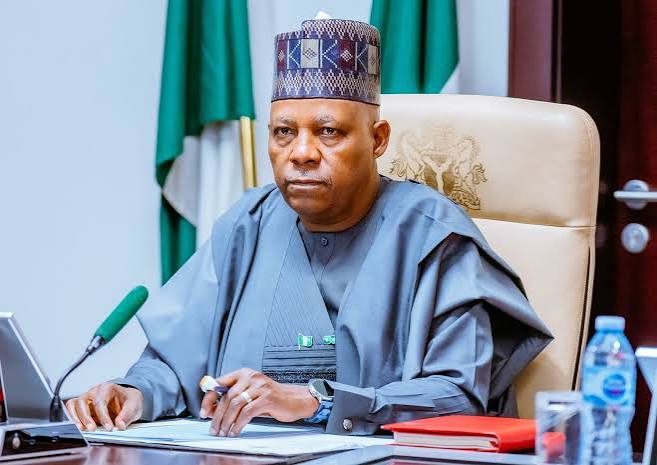
Vice President Kashim Shettima announced the commitment on Thursday in Abuja after leading a Nigerian delegation to the three-day Ethiopia-Nigeria Nutrition Leadership Exchange Forum in Addis Ababa and Oromia.
He said the knowledge gained would be incorporated into the Nutrition 774 Initiative, a programme designed to improve nutrition outcomes across Nigeria’s 774 local government areas.
Shettima noted that the exchange provided an opportunity for Nigeria to study practical strategies for addressing malnutrition and strengthening food systems, while identifying approaches suited to the country’s circumstances.
He stressed the need for stronger collaboration among the federal, state and local governments to ensure that nutrition programmes reach vulnerable households and communities.
The Vice President also highlighted sustainable funding, accountability and effective implementation at the grassroots as essential to achieving lasting improvements in nutrition.
He said the success of the exchange would depend on how effectively the lessons were translated into better outcomes for women, children and other vulnerable groups.
The Nigerian delegation included state governors, commissioners and officials from ministries and agencies responsible for health, education, agriculture, water resources, sanitation, budgeting and emergency management.
Representatives of the Nigeria Governors’ Forum, the Association of Local Governments of Nigeria and other stakeholders also participated in the engagement, organised in partnership with Big Win Philanthropy.
During the exchange, participants examined Ethiopia’s experience in coordinating nutrition programmes, securing sustainable funding and using data to monitor progress and strengthen accountability.
Zamfara State Governor, Dauda Lawal, said insecurity had disrupted food production and access to nutritious food in his state, despite its agricultural potential.
He said the experience reinforced the need for states facing similar challenges to learn from countries that had developed practical responses to food insecurity and malnutrition.
Meanwhile, Abia State Governor, Alex Otti, said his administration would extend nutrition interventions across the state’s 17 local government areas, 184 wards and communities.
Otti noted that although broader economic policies could help reduce poverty and unemployment, targeted interventions remained necessary to support vulnerable households that might not immediately benefit from economic growth.
Jigawa State Governor, Umar Namadi, said his administration would build on existing nutrition programmes, including an initiative that trained about 600 women to produce Tom Brown, a locally prepared, nutrient-rich food used to feed children.
Similarly, Osun State Governor, Ademola Adeleke, said his administration was seeking to strengthen existing nutrition programmes for children and pregnant women through lessons from Ethiopia.
At the federal level, the Coordinating Minister of Health and Social Welfare, Professor Muhammad Ali Pate, announced plans to collaborate with at least two states with the highest burden of malnutrition to begin implementing the initiative at the local level.
The proposed collaboration is expected to provide an initial framework for translating the forum’s recommendations into practical interventions across communities.
Ethiopia’s Minister of Health, Dr Mekdes Daba, commended Nigeria’s commitment to implementing the Nutrition 774 Initiative across all its local government areas, describing it as a demonstration of political will.
The exchange ended with both countries reaffirming their commitment to continued cooperation and the sharing of experiences in tackling malnutrition.
Nigeria’s next challenge will be to translate the commitments into sustained funding, effective coordination and measurable improvements in nutrition, particularly among children, pregnant women and other vulnerable populations.