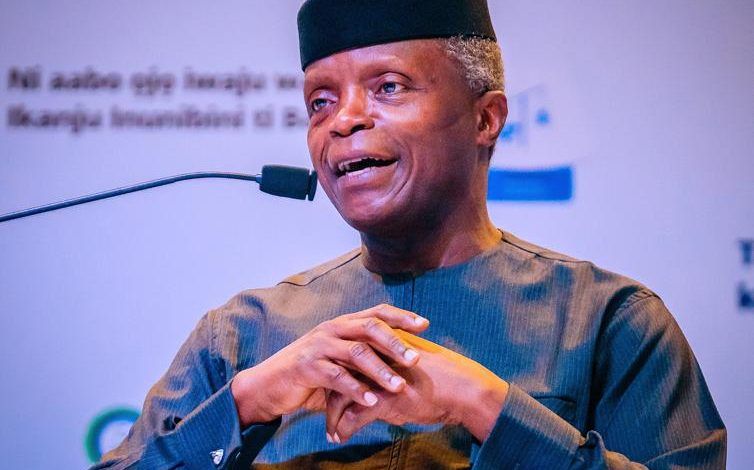
Former Vice President Prof. Yemi Osinbajo has called for a renewed commitment to citizen-focused leadership, declaring that a nation’s greatness must be measured not by its wealth or power, but by how well it serves its most vulnerable citizens.
Delivering the keynote address at the Rotary International District 9141 Conference in Port Harcourt, Rivers State, Osinbajo spoke on the theme, “The Magic of Connection: The Imperative and Privilege of Service.” He underscored that governance should be rooted in service, and that access to quality education, healthcare, and social protection are not luxuries but basic rights of every Nigerian.
“Politics is, or ought to be, the art of service,” Osinbajo said. “The delivery of essential services to citizens — especially the poor and vulnerable — is not charity. It is the very purpose of government.”
Drawing on Nigeria’s post-independence history, he cited Chief Obafemi Awolowo’s bold introduction of free primary education in the old Western Region as a milestone in service-driven leadership, noting that the policy was pursued despite significant financial challenges.
He also offered insights from his time as Vice President, recalling the ideological battles during the drafting of the All Progressives Congress (APC) manifesto in 2014. One of the central debates, he noted, focused on embedding a comprehensive social investment framework — one that later birthed initiatives like the National School Feeding Programme, TraderMoni, and Conditional Cash Transfers.
“These programmes were not handouts,” he emphasized. “They were investments in human dignity and national stability.”
Addressing the broader African context, Osinbajo lamented the entrenched corruption and misallocation of public resources, arguing that the continent’s real problem is not a lack of talent, but the failure to harness its abundant human capital.
In a challenge to Nigeria’s elite class, he posed a reflective question: “Have our accomplishments truly served others, or merely ourselves?” He urged for a shift in budget priorities and fiscal policies that directly address poverty, inequality, and the welfare of marginalized groups.
With a tone of urgency and optimism, Osinbajo closed his remarks by emphasizing that the future of the nation — and the continent — hinges not on rhetoric, but on how leaders deliver real, measurable impact in the lives of everyday people.