FG targets modernised production, traceability and private investment as government moves to transform livestock value chain….
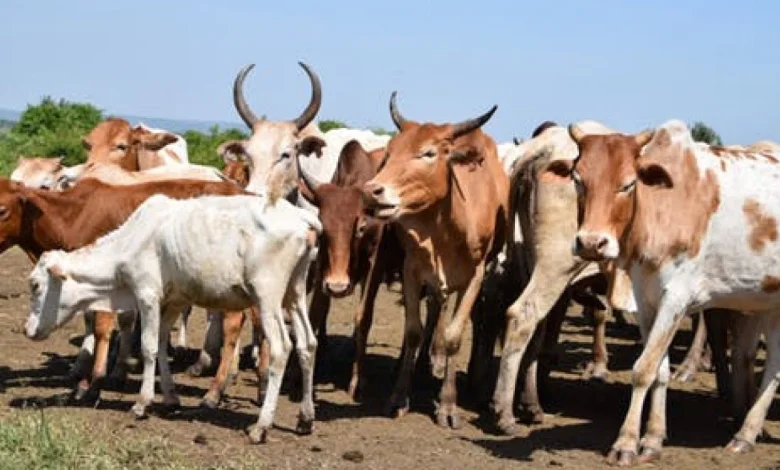
Nigeria’s livestock industry is now contributing about N3.23 trillion to the country’s Gross Domestic Product, GDP, as the Federal Government steps up efforts to modernise production and unlock greater economic value from the sector.
The Minister of Livestock Development, Idi Mukhtar Maiha, disclosed this on Tuesday during an interview, where he outlined ongoing government initiatives aimed at transforming the industry and improving productivity across its value chain.
Maiha said the creation of the Ministry of Livestock Development was driven by the need to formalise the sector, address longstanding structural challenges and create an environment capable of attracting greater investment.
He explained that the government has brought existing livestock policies under the National Livestock Growth Acceleration Strategy, a framework built around 10 key pillars.
According to him, the Federal Government has also developed a 15-year National Livestock Master Plan to provide a long-term roadmap for the development of the sector.
The minister put the estimated value of Nigeria’s livestock industry at about 32 billion dollars, stressing that improving productivity across the value chain remains critical to expanding its contribution to the economy.
He also revealed that the number of states with dedicated livestock ministries or agencies has risen from just three to 21, reflecting what he described as growing institutional attention to the sector.
As part of the next phase of the reform, Maiha said the government plans to establish Livestock Development Centres through partnerships involving federal and state governments as well as private-sector investors.
He said the centres are expected to provide a broad range of services, including genetic improvement, feed and fodder production, animal health, biosecurity and livestock processing.
The minister also addressed one of the most persistent issues in Nigeria’s livestock industry — open grazing and nomadic animal movement.
Maiha said the traditional practice of moving animals over long distances was no longer sustainable, arguing that it reduces productivity and has also contributed to conflicts in different parts of the country.
He disclosed that Nigeria has approximately 417 grazing reserves, but noted that many of them have yet to be rehabilitated and have faced varying degrees of encroachment.
According to him, the Federal Government is therefore engaging states that are prepared to provide land for the development of livestock centres and more settled systems of animal production.
Beyond improving production, the government is also moving to strengthen the tracking of animals across the country.
Maiha announced plans to introduce livestock identification and traceability mechanisms involving ear tags, radio-frequency identification technology and microchips.
He said the system would allow authorities to monitor the movement of animals while providing more accurate information on the size and distribution of Nigeria’s livestock population.
The minister said better data would also strengthen disease surveillance and improve the planning of vaccination and disease-control programmes.
Among the diseases targeted are foot-and-mouth disease, peste des petits ruminants, contagious bovine pleuropneumonia, anthrax, rabies and African swine fever.
Maiha said the combination of higher production, expanded processing capacity and reliable livestock traceability would position the sector to generate significantly greater economic returns for Nigeria.