Registrar-General says fragmented databases are weakening efforts to trace illicit funds, corporate abuse and money laundering….
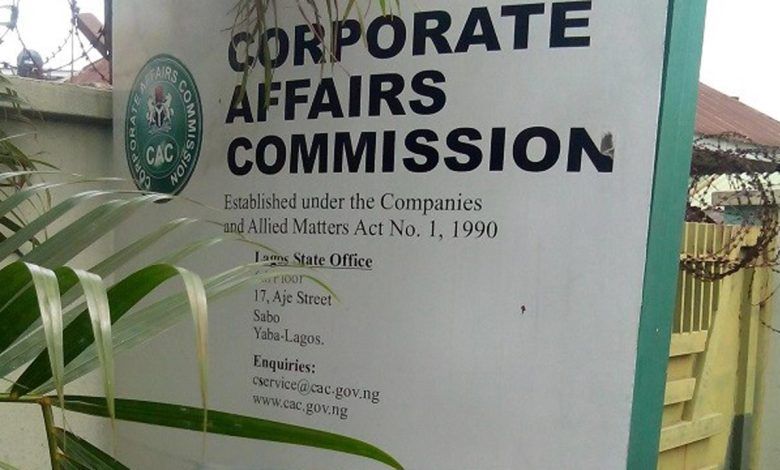
The Corporate Affairs Commission is pushing for a unified national system for tracking beneficial ownership, saying fragmented corporate records are making it harder to identify the individuals who ultimately own or control businesses in Nigeria.
The Registrar-General and Chief Executive of the CAC, Hussaini Magaji, made the call on Tuesday in Abuja at a training programme on beneficial ownership registers organised for journalists and civil society organisations.
Magaji said Nigeria needed an interconnected framework that would bring ownership information maintained by different institutions together, particularly where companies operate across multiple sectors and regulatory jurisdictions.
He proposed that the CAC’s corporate registry should serve as the central data backbone for the system, while retaining the statutory responsibilities of other agencies.
“This is not about taking away the legitimate statutory responsibilities of NEPZA or NEITI. It is about connecting the dots,” the Registrar-General said.
He argued that corporate ownership information should not remain isolated in separate databases when the objective is to establish who owns, controls or ultimately benefits from a company.
“Because if the objective is transparency and accountability, then information should not exist in silos. We must make it possible to see the complete picture,” he added.
Nigeria currently operates separate beneficial ownership systems across different areas of the economy.
The CAC maintains a Beneficial Ownership Register, while ownership information relating to entities in Free Trade Zones falls under the Nigeria Export Processing Zones Authority. Beneficial ownership information in the extractive sector is maintained within the Nigeria Extractive Industries Transparency Initiative framework.
According to Magaji, although the registers are operated under different institutional mandates, they are essentially designed to answer the same questions: who owns an entity, who controls it and who ultimately benefits from it.
“The information we are trying to establish is substantially the same. Ultimately, we are trying to answer the same fundamental questions: Who owns this entity? Who controls it? Who benefits from it? And who is the natural person behind the corporate structure?” he said.
He noted that much of the underlying corporate information is already connected to records held by the CAC, making greater coordination between the different systems necessary.
The proposed harmonisation comes as Nigeria continues efforts to strengthen corporate transparency and prevent companies and other legal structures from being exploited for money laundering, corruption, tax evasion and other illicit financial activities.
Magaji challenged journalists and civil society groups to take a more active role in examining how beneficial ownership information is collected and used.
He called for interoperability between the various registers, common data standards and measures to eliminate unnecessary duplication, while stressing that legitimate privacy and data protection safeguards must also be respected.
“To journalists and Civil Society Organisations: Your voice is needed in this conversation. We want you to interrogate this issue. Ask the difficult questions,” he said.
The Registrar-General also described beneficial ownership transparency as more than a regulatory obligation, saying the information can serve as a tool for holding companies and their owners accountable and protecting public resources.
He said journalists investigating companies, transactions, procurement arrangements or business relationships should go beyond the names appearing on the surface and establish who ultimately controls or benefits from the entities involved.
According to Magaji, agencies such as the Economic and Financial Crimes Commission, the Independent Corrupt Practices and Other Related Offences Commission and the National Drug Law Enforcement Agency have already used beneficial ownership information in investigations and enforcement activities.
He, however, cautioned against interpreting the appearance of an individual’s name in a corporate register as evidence of wrongdoing.
“Information must be properly understood, independently verified and reported fairly and responsibly,” he said.
The CAC says access to its beneficial ownership information is free, a move Magaji said was intended to ensure that transparency tools are accessible to journalists, civil society organisations and other users.
“When investigating a company, a transaction, a procurement arrangement or a business relationship, ask: Who owns this company? Who ultimately controls it? Who benefits from it? Are there relationships that are not immediately visible?” he said.
The commission is also preparing to host a Global Conference on Beneficial Ownership in Lagos on November 8, 2026.
The event is expected to bring together about 200 participants from 43 countries and will examine Nigeria’s progress since its commitment at the London Anti-Corruption Summit, as well as the next stage of beneficial ownership transparency.
Magaji said the conference would provide an opportunity to deepen discussions around harmonisation, interoperability and the effective use of corporate ownership information.
“The world is watching Nigeria. Countries that are seeking to strengthen their own beneficial ownership systems are looking at our experience,” he said.
For the CAC, however, the effectiveness of the system will ultimately depend not simply on how much information is collected, but on whether institutions can connect and use that information to uncover hidden corporate relationships and prevent abuse.
“Nigeria needs a transparency system that does not merely collect information, but connects information,” the Registrar-General said.
The CAC’s Persons with Significant Control Rules, 2022, provide the framework for identifying individuals who exercise significant ownership, control or influence over companies and other relevant entities. In Nigeria, the term Person with Significant Control is used within the corporate framework for what is commonly described internationally as beneficial ownership.