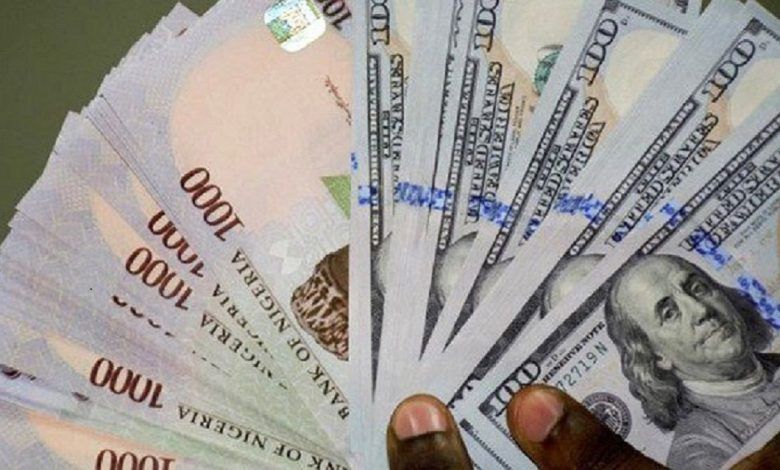
Currency weakens amid global dollar strength, falling reserves, and persistent demand-supply imbalance….
The Nigerian currency extended its losing streak on Thursday, with the naira slipping to N1,355 per dollar in the official market, underscoring renewed pressure in the foreign exchange space.
Figures released by the Central Bank of Nigeria show the currency weakened from N1,348.1/$ recorded a day earlier, continuing a gradual downward trend that has defined recent trading sessions.
Intraday data revealed fluctuations between N1,350/$ and N1,355.8/$, with the naira settling at an average rate of N1,354.19/$. Market activity remained relatively moderate, with 46 interbank deals recorded during the session.
Reserves Edge Lower
The pressure on the naira comes alongside a slight dip in Nigeria’s external reserves, which fell to $48.48 billion from $48.54 billion earlier in the week.
While the decline appears marginal, it signals a reduced buffer for sustained intervention in the FX market at a time when demand for foreign currency continues to outpace supply.
Compared to a week earlier, when the naira closed at N1,341.01/$, the latest figures highlight a steady, if measured, depreciation trend.
Global Forces Add to Pressure
External factors are also playing a significant role. Rising geopolitical tensions, particularly involving Iran and the United States, have boosted demand for the US dollar as a safe-haven asset.
Concerns around the Strait of Hormuz, a key artery for global oil shipments have added to market uncertainty, supporting crude prices and strengthening the dollar.
The dollar index hovered near 98.82 during the period, on track for weekly gains, while other major currencies including the euro, British pound, and Japanese yen also weakened.
Emerging market currencies such as the Philippine peso, Malaysian ringgit, and Indian rupee similarly came under pressure, reflecting a broader global trend.
Outlook: Balancing Oil Gains and Market Risks
Analysts say the naira’s trajectory will depend on a mix of domestic policy responses and global market conditions.
Higher oil prices could improve Nigeria’s foreign exchange inflows, offering some relief. However, ongoing global uncertainties may limit those gains.
Earlier in the week, the naira had already shown signs of weakness, falling to N1,349/$ on Monday from N1,342.5/$ at the previous close indicating that the current slide is part of a broader pattern rather than a sudden shock.
CBN Plays Down Concerns
Despite the dip in reserves, Olayemi Cardoso has urged calm, suggesting that short-term fluctuations should not be overinterpreted.
The CBN maintains that reserves could climb to $51 billion by the end of 2026, as part of its broader strategy to stabilise the economy and strengthen external buffers.
For now, the naira remains caught between internal constraints and external shocks. With demand for dollars still elevated and global risks lingering, the pressure on Nigeria’s currency may persist in the near term, keeping markets and policymakers on alert.