With 100 days to the first ballot of the 2027 general elections, the Independent National Electoral Commission, INEC, is stepping up preparations with the deployment of artificial intelligence tools, enhanced cybersecurity measures and plans to engage more than 1.4 million ad hoc personnel for the polls.
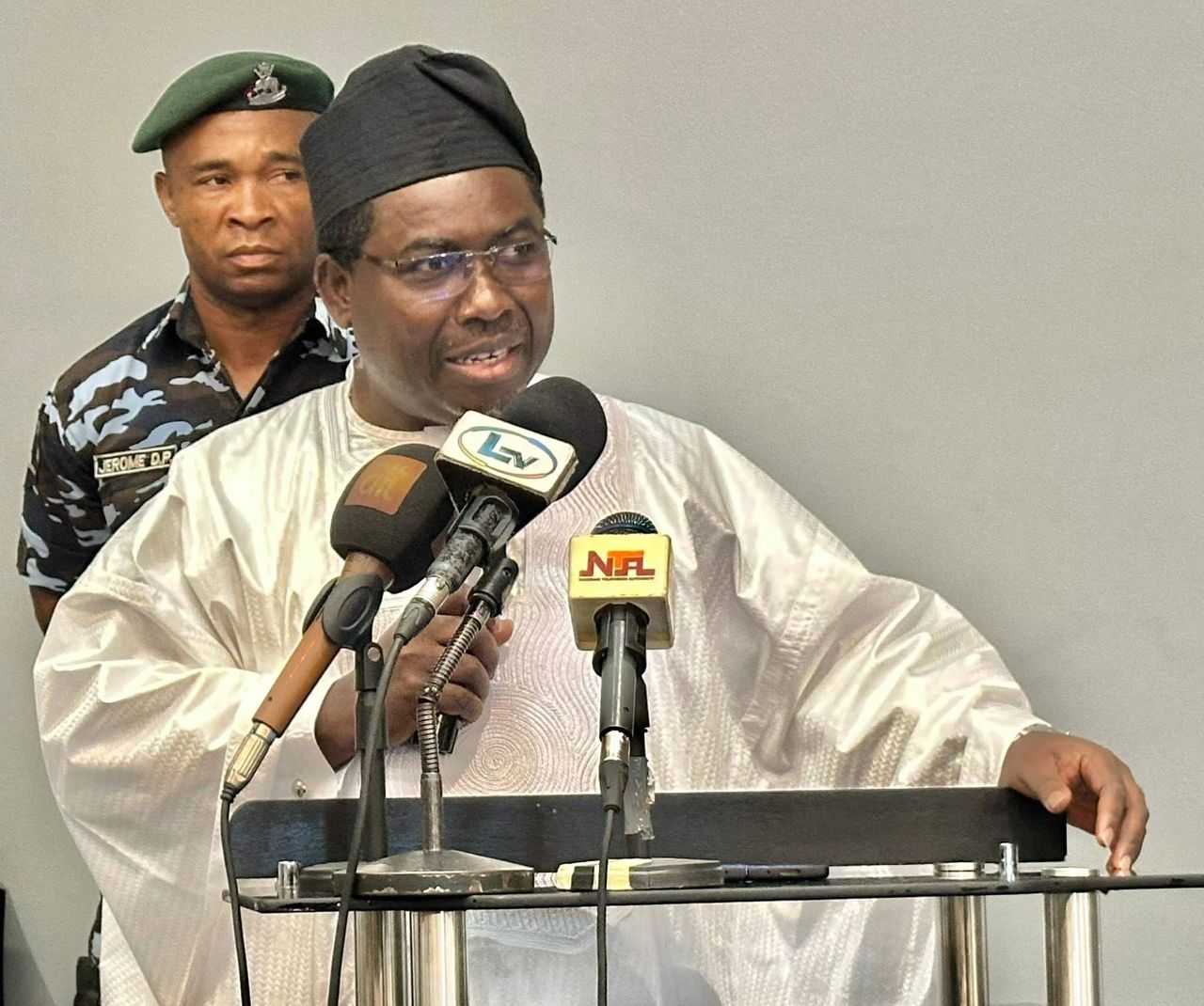
INEC Chairman, Professor Joash O. Amupitan, disclosed this on Tuesday in Abuja at a World Press Conference and National Stakeholders’ Meeting organised to mark 100 days to the first ballot of the 2027 elections.
Amupitan said the commission had established a dedicated Artificial Intelligence Division and was integrating AI tools into its election results verification and cybersecurity systems as part of efforts to strengthen the integrity and resilience of the electoral process.
He said automated AI auditing tools were being integrated into the results verification process under a five-pillar AI Governance Framework, with mandatory human oversight.
The commission, he added, was finalising an AI governance policy to provide clear guidelines for the responsible deployment and use of artificial intelligence throughout the electoral process.
Beyond results verification, Amupitan said INEC was deploying AI-driven anomaly detection tools to monitor database traffic and strengthen the protection of its public portals against cyber intrusions and unauthorised alterations.
The INEC chairman, however, raised concerns over the growing sophistication of generative AI, voice cloning and deepfake technology, warning that the tools could be exploited to undermine public confidence in the elections.
He noted that the technology had made it increasingly easy to fabricate the voices of election officials, manipulate result sheets and produce fake official documents, with such material capable of spreading rapidly before it can be properly verified.
Amupitan consequently urged media organisations to establish dedicated fact-checking desks and verify election-related information with INEC before publication, stressing the importance of accuracy over speed in election reporting.
The commission also appealed to the Federal Government to release the outstanding portion of its budget promptly to enable it to complete preparations for the 2027 elections.
Amupitan acknowledged the Federal Government’s commitment to democratic governance through the timely release of statutory allocations to the commission, saying funds released so far had enabled INEC to meet international vendor obligations, finance the production of critical election technology, upgrade infrastructure and sustain multi-stakeholder operations nationwide.
The European Union Ambassador to Nigeria and the Economic Community of West African States, Gautier Mignot, also called on stakeholders to support INEC’s preparations, particularly through adequate funding.
Mignot described the organisation of the elections as a major undertaking and reaffirmed the European Union’s respect for Nigeria’s sovereignty and its neutrality in the contest between political parties and candidates.
He disclosed that the EU would deploy an electoral mission comprising experts to monitor preparations for the elections, observe the conduct of the polls and assess the post-election process before issuing recommendations.
INEC to engage 1.4 million ad hoc personnel
As part of its preparations, INEC said it would require 707,384 ad hoc personnel for the Presidential and National Assembly elections scheduled for January 16, 2027.
Another 707,384 personnel will be required for the Governorship and State Houses of Assembly elections scheduled for February 6, bringing the total number of engagements to 1,414,768 across 176,846 polling units.
The figure represents an increase from the approximately 1.2 million ad hoc personnel engaged during the 2023 general elections.
Amupitan said the bulk of the personnel would again be drawn from the National Youth Service Corps, recalling that more than 70 per cent of the ad hoc staff deployed in 2023, representing nearly 850,000 people, were corps members and student volunteers.
He added that the INEC Portal for the Recruitment of Election Staff opened on September 18 and would close at midnight on November 18.
National voter register rises to 103 million
The commission also disclosed that Nigeria’s National Register of Voters had risen to 103 million following the registration of 10,772,421 new voters recorded during the three phases of the Continuous Voter Registration exercise.
The register will be displayed for public scrutiny from October 9 to 15, while the distribution of Permanent Voter Cards from Phase One will commence at Local Government centres on October 9.
Amupitan further disclosed that 18 of the 22 registered political parties had submitted candidates for the presidential election.
He also confirmed that INEC received the certified true copy of the Supreme Court judgment in INEC v. Zenith Labour Party on Tuesday morning and had commenced a review of its implications.
Stakeholders seek credible, transparent elections
Stakeholders at the meeting called for greater collaboration among electoral institutions, political parties, security agencies, the media and voters to ensure credible and peaceful elections.
The Chairman of the House of Representatives Committee on Electoral Matters, Adebayo Balogun, said the committee had written to INEC to enforce the Supreme Court judgment relating to Section 74 of the Electoral Act.
Similarly, the Chairman of the Senate Committee on Electoral Matters, Simon Lalong, described credible elections as a collective responsibility requiring the commitment of political parties, candidates, security agencies, the media, civil society organisations and voters.
Representing the Inspector-General of Police, Olatunji Disu, the Assistant Inspector-General of Police, Francis Idu, disclosed that clearance operations were ongoing in Kogi, Niger, Benue and Taraba states to address identified crisis points and promote social stability ahead of the elections.
The National Chairman of the Inter-Party Advisory Council, Yusuf Mamman Dantalle, commended INEC for its handling of the Osun State governorship election but cautioned electoral officials against taking sides with political parties or candidates.
Dantalle also called for deeper engagement between INEC and political parties before the elections, stressing the need for all stakeholders to place national interest above partisan considerations.
With preparations now entering a critical phase, INEC faces the twin challenge of deploying new technologies to strengthen the electoral process while guarding against the same technologies being exploited to spread disinformation, manipulate voters and undermine confidence in election results.
The electoral body is expected to intensify its preparations in the weeks ahead as political parties, candidates, security agencies, the media and millions of voters move closer to the 2027 general elections.