Equatorial Guinea Urges UN Court to Halt France’s Sale of Seized Paris Mansion, Decrying ‘Neo-Colonial’ Tactics

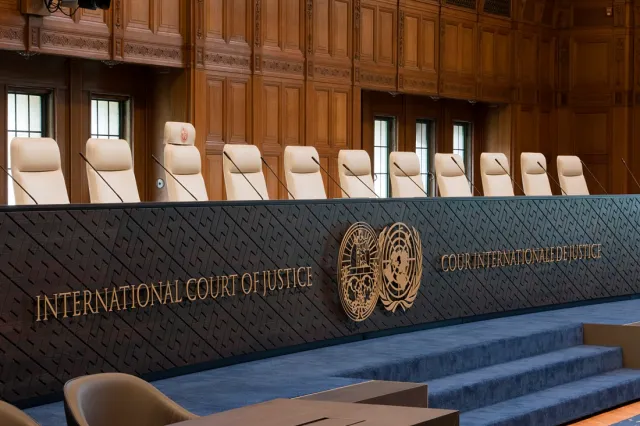
Equatorial Guinea has asked the United Nations’ top court to intervene in a high-stakes legal battle with France over a luxury mansion in Paris, accusing the former colonial power of “neo-colonial” behavior and violating international law.
On Tuesday, lawyers representing the Central African nation appeared before the International Court of Justice (ICJ), demanding an immediate halt to France’s planned sale of the palatial estate on Paris’ exclusive Avenue Foch—a property once owned by the son of Equatorial Guinea’s long-serving president.
“This is not just about property. It’s about sovereignty,” said Carmelo Nvono-Ncá, Equatorial Guinea’s representative to the court. “France’s approach may be described as paternalistic—perhaps even neo-colonial. We cannot accept such disdain for our nation’s dignity and independence.”
The building at the center of the dispute, which features a hammam, private cinema, and nightclub, was seized by French authorities following a 2017 corruption conviction of Vice President Teodoro Nguema Obiang Mangue, son of President Teodoro Obiang Nguema Mbasogo, who has ruled the country since 1979.
Obiang Jr. received a three-year suspended prison sentence and a €30 million fine after being found guilty of embezzling public funds to bankroll an opulent lifestyle abroad.
The verdict led to the confiscation of millions in luxury assets, including the Paris mansion and a fleet of high-end sports cars.
The case at The Hague is the latest twist in a long-running legal saga that has drawn international attention to the lavish spending of Equatorial Guinea’s elite. Despite its vast oil and gas wealth, the country suffers from extreme inequality, with much of the population living in poverty.
This is not Obiang’s first brush with international justice. The United Kingdom sanctioned him in 2021 for allegedly siphoning public funds, citing extravagant purchases like Michael Jackson’s crystal-encrusted glove—reportedly bought for $275,000. Switzerland and Brazil have also opened investigations into his finances.
Equatorial Guinea originally brought a case to the ICJ in 2016, arguing the building was a diplomatic property and thus immune from seizure.
However, in 2020, the court dismissed that claim, determining the mansion was used for private purposes and therefore not protected under the Vienna Convention.
Undeterred, the country filed a new case in 2022, this time asserting that France had breached its obligations under the United Nations Convention against Corruption by failing to return assets allegedly acquired through corrupt means.
At this week’s hearing, Equatorial Guinea called for provisional measures—a form of legal emergency order—to block the sale of the mansion until the court delivers a final ruling. French officials have yet to publicly respond to the latest hearing.
The case underscores broader tensions between European countries pursuing anti-corruption investigations and governments in Africa and beyond that view such efforts as politically motivated or disrespectful of national sovereignty.
While France positions itself as a leader in global anti-corruption efforts, critics argue that its selective enforcement risks echoing colonial-era power imbalances.
The ICJ’s eventual ruling could set a precedent in how international law balances asset recovery, sovereignty, and the global fight against kleptocracy.