The Nigerian government has commenced voluntary evacuation registration for citizens in South Africa amid fears over anti-immigrant protests.
At least 130 Nigerians have already signed up for the evacuation exercise as authorities move to safeguard nationals affected by rising tensions in parts of the country.
Minister of Foreign Affairs, Bianca Odumegwu–Ojukwu, disclosed this in a situation update shared via her X account on Sunday, noting that the exercise is being coordinated through Nigeria’s diplomatic missions in South Africa.
She said the evacuation plan is in line with directives from President Bola Tinubu, who has ordered closer monitoring of developments and enhanced protection for Nigerians abroad.
According to her, the government is currently compiling details of Nigerians willing to return home voluntarily, adding that more registrations are expected as anxiety grows.
Odumegwu-Ojukwu also confirmed ongoing diplomatic engagement with South African authorities, including the summoning of the Acting High Commissioner over the recent unrest.
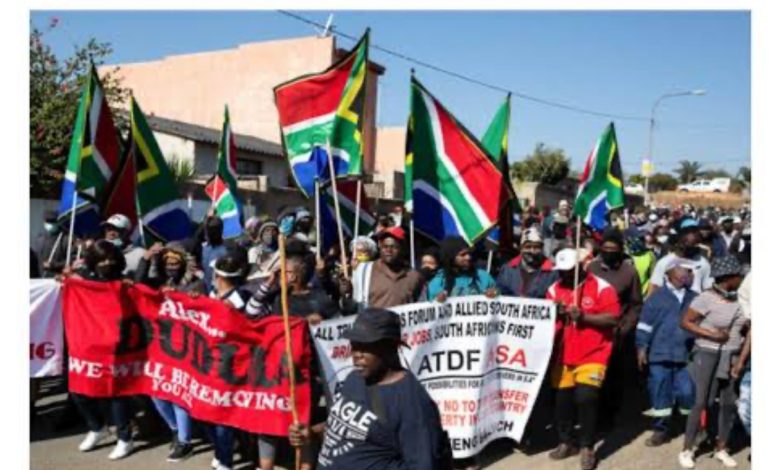
She explained that the situation is linked to renewed anti-immigrant demonstrations in cities such as Pretoria and Johannesburg, which have heightened concern for the safety of foreign nationals.
While noting that South African authorities have condemned acts of violence, she said disturbing visuals circulating online have fuelled global concern over the situation.
The minister added that protests held between April 27 and 29, 2026, were largely peaceful but still required significant police deployment, with security forces occasionally using crowd-control measures.
She, however, clarified that no Nigerian lives were lost and no Nigerian-owned property was destroyed during that particular wave of protests.
Odumegwu-Ojukwu also disclosed two separate deaths involving Nigerians in earlier incidents, both allegedly linked to interactions with South African security personnel, describing them as “unacceptable” and calling for justice.
She further warned that another round of demonstrations is expected between May 4 and 8, 2026, prompting continued coordination between Nigerian and South African authorities.
The minister stressed that Nigeria remains committed to protecting its citizens while working with South Africa under existing bilateral frameworks, including an early warning mechanism designed to prevent escalation of such crises.