
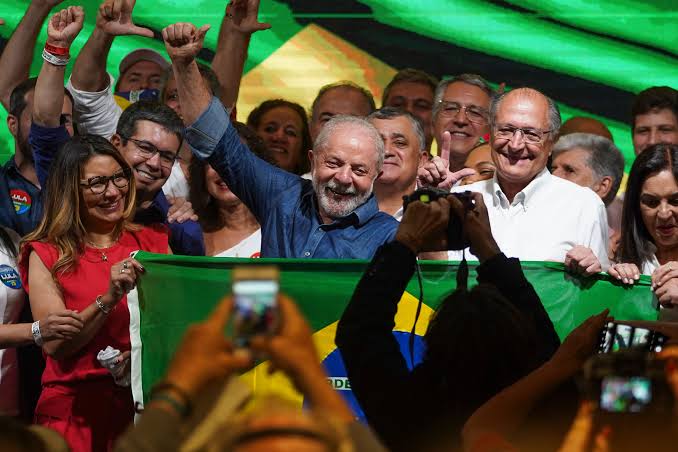
Macron, Sánchez, von der Leyen and China hail Brazilian president’s victory as he prepares to lead a deeply divided nation for another term
French President Emmanuel Macron has called for closer cooperation between France and Brazil following Luiz Inácio Lula da Silva’s re-election, urging both countries to strengthen their strategic partnership and work towards building a fairer world.
Macron congratulated his Brazilian counterpart in a post on X, stressing that the two nations had significant opportunities to deepen their longstanding relationship and advance shared international priorities.
The congratulatory messages extended beyond Paris, with European leaders and China also welcoming Lula’s victory and expressing interest in closer ties with Brasília.
Spanish Prime Minister Pedro Sánchez, a political ally of the Brazilian leader, celebrated the outcome as a potential turning point for progressive politics worldwide. With Spain approaching its November election amid challenging opinion polls for Sánchez, he expressed confidence that Lula’s success could signal a wider resurgence of the political left.
European Commission President Ursula von der Leyen also welcomed Lula’s re-election, describing it as a boost for democracy and multilateralism.
She reaffirmed Europe’s commitment to strengthening its partnership with Brazil, particularly in promoting open trade, defending a rules-based international order and advancing ambitious climate policies.
China similarly congratulated Lula after Brazil’s Superior Electoral Court announced the result of the presidential runoff.
Chinese Foreign Ministry spokesperson Guo Jiakun said Beijing was prepared to work with Brasília to advance their shared vision for the future, signalling its intention to sustain cooperation with the South American nation.
Asked about opposition claims that the election result could be challenged, following Jair Bolsonaro’s reported plan to seek annulment, Guo said China respected the choice of the Brazilian people.
Another dramatic political comeback
Lula’s re-election adds another chapter to one of the most remarkable political comebacks in recent history.
Born into poverty in northeastern Brazil to a family of illiterate farmers, Lula rose through the labour movement to become one of the country’s most influential political figures. His presidency from 2003 to 2010 earned him widespread recognition for social welfare programmes credited with lifting millions out of poverty.
His political fortunes later collapsed amid a corruption scandal that led to his imprisonment for more than 18 months. The convictions were subsequently annulled on procedural and jurisdictional grounds, clearing the way for his return to electoral politics, although the controversy continued to shadow his career.
In 2022, Lula returned to the presidency after defeating Bolsonaro, delivering a stunning reversal for a politician whose future had once appeared bleak.
During his latest term, his administration has recorded progress in reducing inflation and unemployment and expanding efforts to tackle hunger. However, persistent concerns over living costs and public safety have continued to weigh on the government.
His social welfare policies have also remained a point of political contention, particularly as his administration sought to expand support for vulnerable households.
A divided nation and mounting challenges
Despite securing another term, Lula faces the difficult task of governing a country sharply divided along political lines, with a substantial share of voters backing his opponents and demanding a different direction.
His next administration will also confront a hostile political environment, with right-wing forces holding considerable influence in Congress and potentially complicating efforts to push through key reforms.
Economic pressures present another major challenge. Slower growth could constrain government spending and limit the administration’s ability to meet public expectations, even as it seeks to protect social programmes and sustain economic gains.
Security is equally urgent. Brazil continues to grapple with powerful criminal groups whose activities have fuelled violence and fear in working-class communities, increasing pressure on the government to deliver tangible improvements.
Age will also be a factor. Lula, already among the world’s oldest serving leaders, will turn 85 by the end of his new presidential term in 2030. If he completes the term, he will have spent 16 years as Brazil’s president across three separate periods in office.
For now, the international congratulations offer Lula a diplomatic boost as he prepares for another demanding chapter in Brazil’s leadership. But beyond the celebrations, his lasting political legacy will depend on whether he can bridge the country’s divisions, ease economic anxieties and deliver greater security and opportunity for millions of Brazilians.


