The Universal Basic Education Commission (UBEC) has renovated 287 schools and more than 4,000 classrooms across Nigeria as part of a new intervention strategy aimed at transforming schools into complete and functional learning environments.
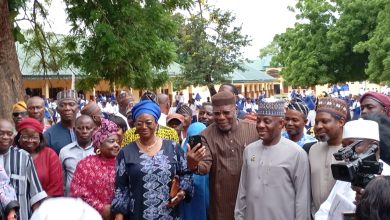
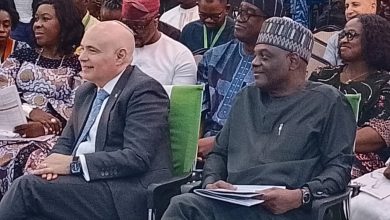
The Executive Secretary of UBEC, Dr Aisha Garba, disclosed this in Abuja while commissioning renovated facilities at Nyanya-Hausawa Basic and Secondary School.
Garba said the commission was moving away from interventions focused solely on constructing or renovating individual classrooms to a “whole-school” approach that addresses the broader needs of learners and teachers.
She said the new approach would cover classrooms, toilets, water supply, electricity, administrative facilities, security infrastructure and learning resources.
According to her, the objective is to ensure that schools benefiting from government intervention have the essential facilities required to provide a safe and conducive environment for teaching and learning.
The UBEC boss said the initiative aligned with the Federal Government’s Renewed Hope Agenda and its commitment to ensuring that Nigerian children have access to quality basic education in safe and conducive learning environments.
She added that new UBEC school projects would now include perimeter fencing, security infrastructure, solar power, boreholes, adequate toilets and classrooms, administrative blocks and playgrounds.
Garba said the commission was also integrating ICT laboratories and smart boards into school projects to expose pupils to digital learning and equip them with skills required for the 21st-century economy.
Beyond physical infrastructure, she said UBEC had expanded its digital learning programme, with 74 digital learning centres commissioned at Model Girls’ Junior Secondary School, AMAC Estate.
She disclosed that more than 2,000 digital learning centres had been established under the current administration.
According to her, the centres are equipped with computers, smart boards, solar power systems, printers, scanners, internet connectivity and security features, while providing online and offline learning content for teachers and pupils.
She added that teachers were also being trained to effectively use the equipment and digital learning resources.
At Nyanya-Hausawa School, which accommodates early childhood, primary, junior secondary and senior secondary sections, UBEC intervened after an assessment found the facilities in a dilapidated condition.
The intervention covered three blocks containing about 30 classrooms and 48 toilets, as well as solar-powered boreholes to provide water for sanitation facilities.
Garba said additional work, including the construction of an administrative block, would be undertaken at the school.
Earlier, UBEC Director of Physical Planning, Ibrahim Nura, said the commission conducted a condition assessment of the school before commencing the project.
He explained that the assessment enabled UBEC to identify the specific needs of the school and tailor the intervention accordingly.
The school principal, Gideon Isah, commended UBEC for the renovation, provision of furniture and installation of the solar-powered water system.
Isah recalled that some pupils previously had to sit on bare floors, saying the improvements had boosted the morale of teachers and students.
He, however, appealed to UBEC to construct an administrative block, noting that the different sections of the school currently operate without one.
The principal disclosed that the community, in partnership with the Parent-Teacher Association, had engaged three security personnel to protect the newly renovated facilities against vandalism.
He pledged that the school community would continue to maintain the facilities and safeguard the investment made in the school.