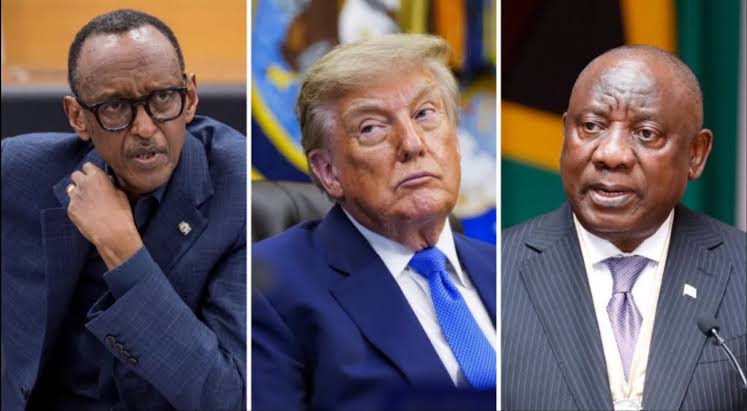
A major trade fallout is looming between Washington and two African nations, as US President Donald Trump moves to strip South Africa and Rwanda of preferential access to the American market, potentially exposing billions of dollars in exports to new tariffs.
Trump has notified Congress of plans to remove both countries from the African Growth and Opportunity Act (AGOA), which allows eligible African nations to export thousands of products to the United States duty-free. The proposed withdrawal is expected to take effect on January 1, 2027.
US Trade Representative Jamieson Greer said an annual review found that South Africa and Rwanda had failed to meet the programme’s eligibility conditions. He added that both governments had been formally informed of Washington’s decision.
The Trump administration cited trade restrictions, investment barriers and concerns over national security and foreign policy as grounds for the move.
In South Africa’s case, Washington also raised concerns about corruption and Pretoria’s international relations, particularly its cooperation with governments considered a threat to American interests.
In a letter to South African President Cyril Ramaphosa, Trump argued that the country’s foreign policy positions could undermine US security interests. He also faulted Pretoria over restrictions affecting American agricultural exports, investment protections, regulatory requirements and intellectual property rights.
South Africa’s Trade Minister, Parks Tau, described the development as a setback, arguing that Washington had introduced fresh concerns that were not part of the trade discussions initiated in 2025.
He said Pretoria would intensify efforts to diversify its export destinations to safeguard jobs and reduce its exposure to changes in US trade policy.
However, South Africa has sought to downplay the potential economic impact, maintaining that most of its exports to the United States do not depend on AGOA benefits.
Government figures show that about 89 per cent of South African exports to the US entered under standard World Trade Organization trade terms in 2025, while roughly 10 per cent benefited from AGOA, compared with 28 per cent in 2024.
Exports covered by the programme also fell to approximately 1.7 billion dollars in 2025, from four billion dollars the previous year.
Despite the declining reliance on AGOA, the broader economic relationship remains substantial. Bilateral trade between both countries stood at 28.8 billion dollars in 2025, while more than 600 American companies operating in South Africa support an estimated 134,600 jobs.
Pretoria has also highlighted its strategic importance to the US, particularly its supply of 12 minerals classified as critical by Washington and its contribution to the production of isotopes used in cancer treatment.
South African manufacturers also rely on American components and materials in products, including vehicles and boats, that are exported to the US under AGOA.
Meanwhile, US Ambassador to South Africa Leo Brent Bozell III blamed Pretoria’s policies for the impending loss of its trade benefits, arguing that the outcome could have been avoided had the government addressed Washington’s concerns.
The latest development further deepens diplomatic tensions between both countries. Relations deteriorated last year after Trump accused South Africa of persecuting its white minority and introduced a programme allowing white Afrikaners to seek asylum in the United States. He also repeated claims of a genocide against the country’s white population, allegations that have been widely discredited.
For Rwanda, the US decision is linked to a separate set of concerns, including human rights, political pluralism, the rule of law and workers’ rights.
The announcement also follows recent sanctions imposed by the US Treasury on Rwanda’s Defence Ministry over its alleged involvement in the conflict in eastern Democratic Republic of Congo.
Washington accused the ministry of deploying thousands of troops to support M23 rebels, allegedly providing them with weapons, military equipment, logistical assistance and training.
Kigali has repeatedly denied backing the armed group.
US trade data indicate that Rwanda’s exports to the American market rose significantly to 43.3 million dollars in 2025, compared with 13.1 million dollars in 2024.
The planned withdrawal of both countries from AGOA now raises fresh questions about the future of their trade relations with Washington and the wider economic consequences for African exporters.