
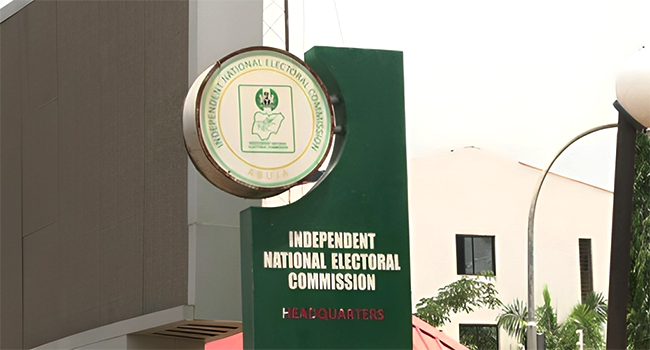
As Nigeria moves closer to the 2027 general elections, the growing power of artificial intelligence is emerging as a new threat to electoral credibility, with INEC warning that fabricated results, cloned voices and manipulated announcements could spark confusion, undermine public trust and trigger violence.
The Independent National Electoral Commission (INEC) says the increasing sophistication of AI-generated content has made it easier for individuals and organised groups to circulate convincing falsehoods capable of misleading voters and discrediting the electoral process.
INEC Chairman, Joash Amupitan, raised the concern on Monday in Abuja while speaking at the opening of a two-day National Summit on Electoral Information Integrity, which focused on artificial intelligence, foreign information manipulation and the protection of Nigeria’s 2027 elections.
He warned that threats to credible elections were no longer restricted to ballot manipulation and disruptions at polling stations, but now extended to digital platforms where misinformation and disinformation could spread rapidly, even before voting begins.
Amupitan explained that malicious actors could use artificial intelligence to create fake election results, forge official documents and circulate fabricated audio recordings announcing non-existent outcomes or claiming that votes had been cancelled in particular locations.
Such material, he cautioned, could deceive the public, weaken confidence in INEC and provoke unrest before the commission officially declares results.
He noted that conventional voter awareness campaigns would not be enough to counter increasingly sophisticated digital threats, particularly when misinformation campaigns were deliberately coordinated, financially supported and targeted at sensitive political issues.
To address the challenge, the INEC chairman called for a coordinated response involving government institutions, security agencies, media organisations, independent fact-checkers and social media companies.
He disclosed that the commission was strengthening its technological capacity, including plans to establish an artificial intelligence unit dedicated to identifying emerging risks and improving the security of electoral processes.
According to him, INEC is also collaborating with development partners, including the European Union, to establish a strategic communication and crisis response network capable of addressing misinformation more effectively.
Amupitan identified voter education, technological safeguards, rapid information verification and stronger engagement with digital platforms as critical measures ahead of the 2027 polls.
He stressed that public education must go beyond explaining voting procedures to equipping citizens with the ability to identify credible electoral information and distinguish official announcements from AI-generated fabrications.
He also advocated the use of short educational videos in local languages and Pidgin English, particularly on widely used messaging platforms such as WhatsApp, to improve public awareness and reach vulnerable communities.
On operational preparedness, the INEC chairman said the commission was developing systems to monitor publicly available digital information, identify coordinated disinformation campaigns, detect manipulated audio and video content, and issue timely clarifications through official channels.
He further urged social media companies to establish faster procedures for identifying and addressing demonstrably manipulated content capable of interfering with elections.
Telecommunications operators and broadcasters, he added, must also support the rapid circulation of verified information, while fact-checkers and journalists should have direct access to reliable sources to authenticate suspicious electoral claims without unnecessary delays.
He equally called on security agencies to distinguish between legitimate political expression and digital activities intended to incite violence or destabilise public order.
Amupitan warned that the misuse of artificial intelligence could affect virtually every stage of the electoral process, from voter registration and political campaigns to the final announcement of results.
He identified fabricated registration portals, counterfeit electoral directives and manipulated voter register information as some of the tactics that could be deployed to confuse citizens and disrupt preparations.
He also expressed concern that AI-generated campaign materials could continue circulating beyond the legally approved campaign period, making it difficult to contain their influence before voters are affected.
Meanwhile, the European Union Ambassador to Nigeria and ECOWAS, Gautier Mignot, described information manipulation as a direct threat to public confidence, urging stakeholders to strengthen their preparedness before electoral tensions escalate.
Mignot emphasised that the fight against disinformation must not become an excuse to suppress freedom of expression, independent journalism or legitimate criticism of public institutions.
He warned against treating every critical report or disagreement as misinformation, stressing that citizens and journalists must retain the freedom to question authorities and hold institutions accountable.
The EU envoy also raised concerns about the disproportionate impact of online manipulation on women, particularly through impersonation, fabricated claims and coordinated digital harassment.
He called for more inclusive access to reliable electoral information through local languages, community media and platforms accessible to persons with disabilities.
Reaffirming the European Union’s support for Nigeria’s democratic institutions, Mignot stressed that the responsibility for determining the country’s electoral future rests entirely with Nigerians, while international partners remain committed to supporting credible and peaceful elections.
The two-day summit, running from November 2 to 3 in Abuja, was organised by the International Press Centre (IPC), the Centre for Media and Society (CEMESO) and Development Alternatives Incorporated (DAI), under the European Union Support to Democratic Governance in Nigeria programme.
The gathering brought together electoral authorities, security agencies, political parties, media organisations, civil society groups and technology stakeholders to examine the growing influence of artificial intelligence and foreign information manipulation on democratic processes.
Participants are expected to develop practical recommendations, strengthen institutional cooperation and establish response mechanisms to protect the integrity of electoral information ahead of Nigeria’s 2027 general elections.