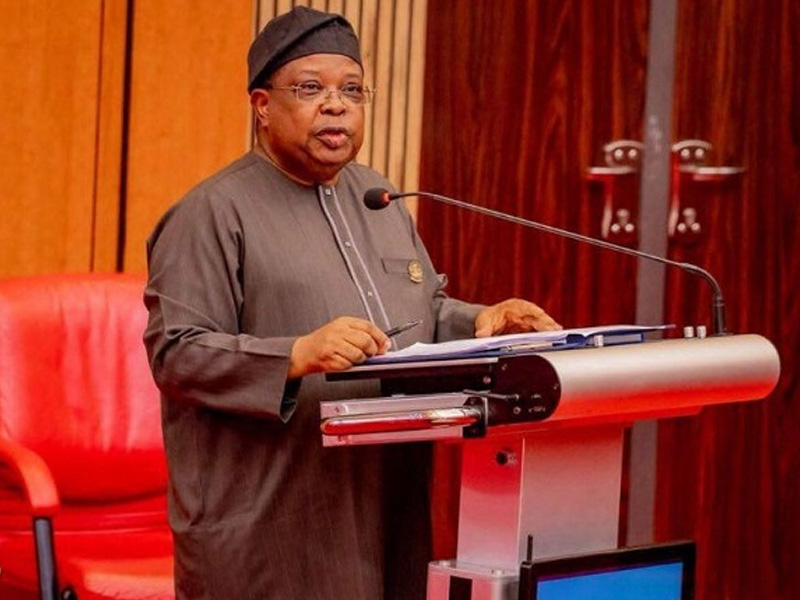
Nigeria’s Minister of Power, Joseph Tegbe, says electricity supply is expected to begin improving within 48 to 72 hours as the Federal Government moves to address challenges affecting power generation and transmission.
The minister gave the assurance in a statement issued on Friday, November 6, amid prolonged electricity disruptions affecting households and businesses in parts of the country, including Lagos and the Federal Capital Territory.
Tegbe attributed the decline in power supply to scheduled maintenance at the Egbin Power Station in Lagos and inadequate gas supply to some thermal power plants.
He explained that the constraints had reduced the volume of electricity available on the national grid, forcing system operators to introduce load shedding in some locations.
The minister also identified damage to critical transmission lines as another factor affecting electricity distribution, particularly in Lagos, where the damaged infrastructure has limited alternative routes for power transmission.
According to him, the government is working with relevant power sector operators to restore affected generating units in phases, improve gas availability and fast-track repairs to damaged infrastructure.
Tegbe said the first generating units are expected to return to operation within the next 48 to 72 hours, while electricity supply would gradually improve as restoration efforts progress.
The minister’s assurance comes amid a disagreement between the Transmission Company of Nigeria (TCN) and Ikeja Electric over the causes of recent power interruptions affecting customers on Band A feeders.
Ikeja Electric had attributed its inability to meet the minimum daily supply requirement of 20 hours for Band A customers to instability on the national grid.
However, TCN rejected the explanation, insisting that reduced electricity generation, rather than a failure of its transmission network, was responsible for the supply shortfall.
The transmission company pointed to gas supply constraints affecting thermal power stations and reduced output from hydroelectric plants as major factors limiting electricity available for distribution.
With consumers continuing to contend with prolonged outages, attention is now on the government’s promised restoration of generating capacity and the expected improvement in electricity supply.