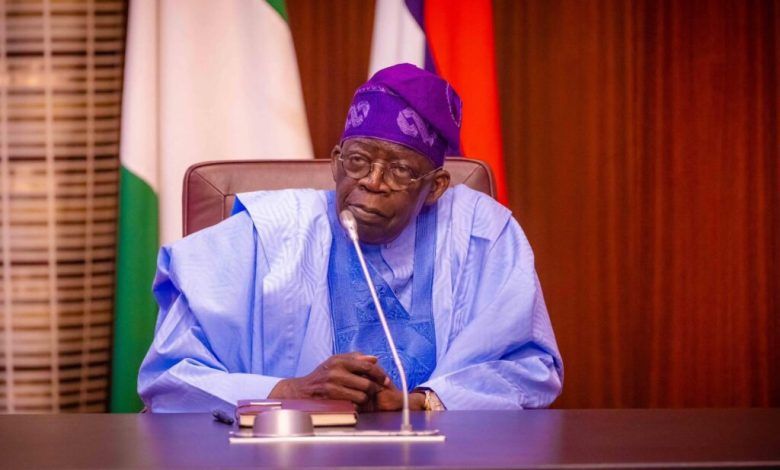
President Bola Ahmed Tinubu has declined to sign the National Drug Law Enforcement Agency (NDLEA) Amendment Bill, 2025, citing concerns over transparency and conflicts with existing financial frameworks.
The bill, which seeks to allow the NDLEA to retain a portion of assets and funds seized during narcotics operations, was returned unsigned to the National Assembly.
The President’s decision was formally communicated during Thursday’s plenary session of the House of Representatives, where Speaker Abbas Tajudeen read the correspondence on the chamber floor.
In his message, President Tinubu argued that the proposed amendment is inconsistent with the country’s current financial regulations, which require all confiscated or forfeited assets from anti-crime operations to be remitted to the Confiscated and Forfeited Properties Account maintained by the federal government.
“Disbursements to any recovery agency, including the NDLEA, must be authorized by the President, with the consent of both the Federal Executive Council and the National Assembly,” Tinubu stated.
The President further emphasized that the bill lacks sufficient justification to override existing procedures that are designed to ensure accountability and institutional oversight.
“There is no compelling reason to change the current process which promotes transparency by involving both the executive and legislative arms of government,” he added.
The rejected amendment had been pushed as a means to enhance NDLEA’s operational capacity by enabling it to reinvest recovered funds directly into its counternarcotics activities. Supporters of the bill argued that such financial autonomy would strengthen the agency’s effectiveness.
However, Tinubu’s decision aligns with broader concerns about financial mismanagement, accountability, and oversight—especially in agencies handling recovered assets.
Similar positions have been taken in past administrations to curb discretionary spending by enforcement bodies.
With the President’s refusal, the National Assembly may choose to rework the bill, override the veto with a two-thirds majority, or shelve the proposal entirely.