Residents of Lagos have been urged to prepare for more heavy rainfall and possible flash floods as the state government steps up efforts to minimise the impact of the rainy season.
The warning follows days of persistent rainfall that flooded major roads and residential areas in parts of Lekki, Victoria Island, Ikoyi, Maryland, Ikeja, Ikorodu and Ajah, disrupting businesses and leaving many commuters stranded.
Speaking during an inspection of the demolition of illegal structures on the Lagos-Badagry Expressway, Commissioner for the Environment and Water Resources, Tokunbo Wahab, said the flooding was largely caused by heavy rainfall coinciding with high tidal levels, which temporarily prevented stormwater from draining into the lagoon and the Atlantic Ocean.
He explained that, “when the sea level is up and it rains heavily, storm water cannot discharge into the lagoon”, adding that “within one or two hours after the rain stops, the water will recede.”
The commissioner, however, acknowledged that some communities continue to experience persistent flooding, saying areas such as Ajiran are being addressed through ongoing drainage projects. He blamed some of the challenges on illegal land reclamation, noting that “it is not because of the government, but because of irresponsible land-owning families”.
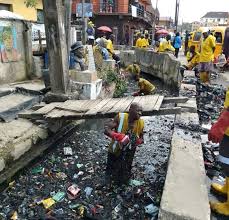
Wahab also urged residents to dispose of waste through designated PSP operators and avoid dumping refuse into drainage channels, warning that blocked drains significantly worsen flooding.
On the ongoing demolition of illegal structures along the Lagos-Badagry Expressway, he said the exercise is aimed at restoring the highway corridor, stressing that “the operation is once and for all”, while warning that anyone who returns to occupy the cleared median will be removed and prosecuted.