President of the Nigeria Football Federation (NFF), Ibrahim Musa Gusau, has resigned from office, ending his tenure as the head of Nigeria’s football governing body.
Gusau announced his resignation on Thursday, August 27, 2026, during a press conference at the NFF headquarters in Abuja, amid growing concerns over the state of Nigerian football and the leadership of the federation.
The former NFF president said his decision followed consultations with his family, friends and key football stakeholders. He also disclosed that he had advised members of his board to consider taking a similar step.
The NFF subsequently confirmed the resignation of Gusau, members of the Executive Committee and its General Secretary, Mohammed Sanusi, marking a major shake-up in the administration of Nigerian football.
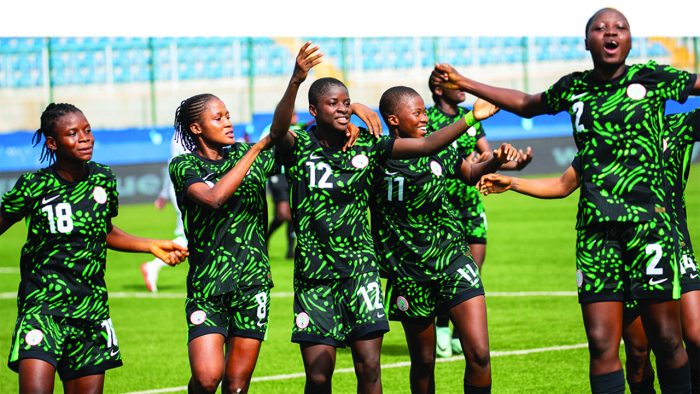
Gusau’s resignation comes at a challenging time for the country’s football teams. The Super Eagles failed to secure qualification for the 2026 FIFA World Cup, while the Super Falcons also suffered a major setback after missing out on the 2027 FIFA Women’s World Cup for the first time since the competition began in 1991.
The Falcons, who entered the Women’s Africa Cup of Nations as defending champions, were knocked out by Cameroon in the quarter-finals. Nigeria’s hopes of reaching the 2027 World Cup were subsequently ended after a 2–1 defeat to South Africa in the qualification play-off.
Gusau’s administration had also come under scrutiny over the management of a ₦17 billion Federal Government intervention fund intended to settle outstanding financial obligations involving the country’s national teams. Security and anti-corruption agencies were reported to have shown interest in the handling of the funds.
Despite the challenges that characterised his tenure, Gusau highlighted several areas where his administration made progress, including coaching education, domestic league development, refereeing and football infrastructure.
He also indicated his willingness to remain involved in the development of Nigerian football after leaving office, stressing that his experience and connections within African football could still be useful to the country.
Gusau was elected NFF president in September 2022, succeeding former president Amaju Pinnick. His tenure recorded notable achievements, including the Super Falcons’ victory at the 2025 Women’s Africa Cup of Nations.
However, those successes were overshadowed by the failure of Nigeria’s senior men’s and women’s teams to qualify for their respective World Cups, alongside increasing concerns over the administration and management of the country’s football.
His resignation also comes only weeks before the NFF’s scheduled elective congress on September 27 in Lafia, Nasarawa State.
The leadership changes are expected to usher in a new phase for Nigerian football, with attention now turning to the process of stabilising the federation and determining the direction of the sport under a new administration.