Power Minister says underperforming operators will face sanctions as government moves to restore discipline across the electricity market……
The Federal Government is preparing to introduce a new performance scorecard for operators across Nigeria’s electricity value chain, with companies that fail to meet set targets facing sanctions and those that perform well receiving incentives.
The move comes against the backdrop of the enormous cost Nigerians bear because of unreliable electricity supply, with households and businesses estimated to have spent N16.5 trillion on self-generated power in 2023.
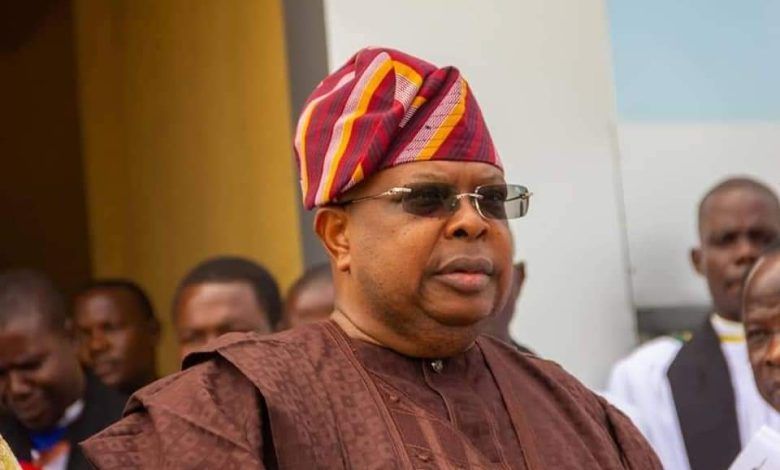
Minister of Power, Joseph Olasunkanmi Tegbe, announced the planned performance framework in a policy brief presented by his Special Adviser, Martins Olajide, at the Nigerian Economic Summit Group’s Industrialisation and Competitiveness Forum on Wednesday.
Tegbe said the government would deploy performance scorecards covering power sector personnel, distribution companies (DisCos) and generation companies (GenCos) as part of a broader effort to establish clear accountability across the electricity market.
Under the proposed framework, operators would be assessed against defined performance targets, with high performers rewarded while those consistently falling short could face sanctions.
The minister said the approach was designed to restore discipline in the sector and ultimately improve electricity supply to consumers.
The government is also working on tariff reforms intended to protect vulnerable electricity consumers while ensuring that operators across the value chain are able to meet their supply obligations.
According to Tegbe, the measures form part of the ministry’s eight-point agenda for stabilising the power sector, improving governance and restoring discipline in the electricity market.
Despite having 13,625 megawatts (MW) of installed grid capacity, Nigeria’s average daily available capacity stands at only about 4,854MW, Tegbe said.
That means roughly 62 per cent of the country’s installed capacity is currently unavailable for regular grid supply, even as realistic peak electricity demand is estimated at around 20,000MW.
Tegbe described the situation as a major imbalance between the country’s power infrastructure and the electricity actually reaching consumers.
“The power arithmetic does not add up,” the minister said, pointing to the widening gap between available generation and demand.
The shortfall has pushed millions of households and businesses to depend heavily on generators and other forms of self-generation, creating an additional financial burden on consumers.
Tegbe said Nigerians spent an estimated N16.5 trillion on self-generated electricity in 2023, compared with only about N1 trillion generated as revenue through the national grid.
The figures highlight the economic cost of the country’s persistent electricity challenges, with consumers spending substantially more to secure power independently than the grid generates in revenue.
The minister further cited World Bank estimates putting the annual economic cost of inadequate electricity supply in Nigeria at approximately $25 billion, equivalent to between five and seven per cent of the country’s Gross Domestic Product.
He argued that improving the performance of electricity operators and implementing sustainable tariff reforms were essential to building a reliable power market capable of supporting businesses, industrial growth and productivity.
The government, he said, would also focus on getting more value from existing electricity infrastructure rather than relying solely on new investments.
As part of the strategy, the ministry plans to strengthen key transmission corridors, including the Lagos, Enugu-Port Harcourt and Abuja-Kaduna-Kano corridors.
The Lagos corridor, Tegbe said, would serve as a proof of concept for the government’s wider grid stabilisation programme.
The planned performance scorecards are therefore expected to put greater pressure on operators to deliver measurable results, while giving the government a clearer basis for identifying weaknesses across generation, transmission and distribution.
For electricity consumers, however, the bigger test will be whether the new accountability measures can translate into more hours of supply, fewer outages and a reduced dependence on expensive self-generation.