The Minister of Defence, General Christopher Gwabin Musa (rtd), has called for the reintroduction of modernised, technology-driven tollgates on major highways across the country as part of efforts to strengthen national security and track criminal activities.
Musa’s Special Assistant on Media, Leah Katung-Babatunde disclosed this in a Statement on Saturday, 7th November, 2026.
The Minister said automated tollgates equipped with modern Information and Communications Technology (ICT) would serve as critical security infrastructure by monitoring vehicular movements, identifying suspicious activities and helping security agencies track and apprehend criminals.
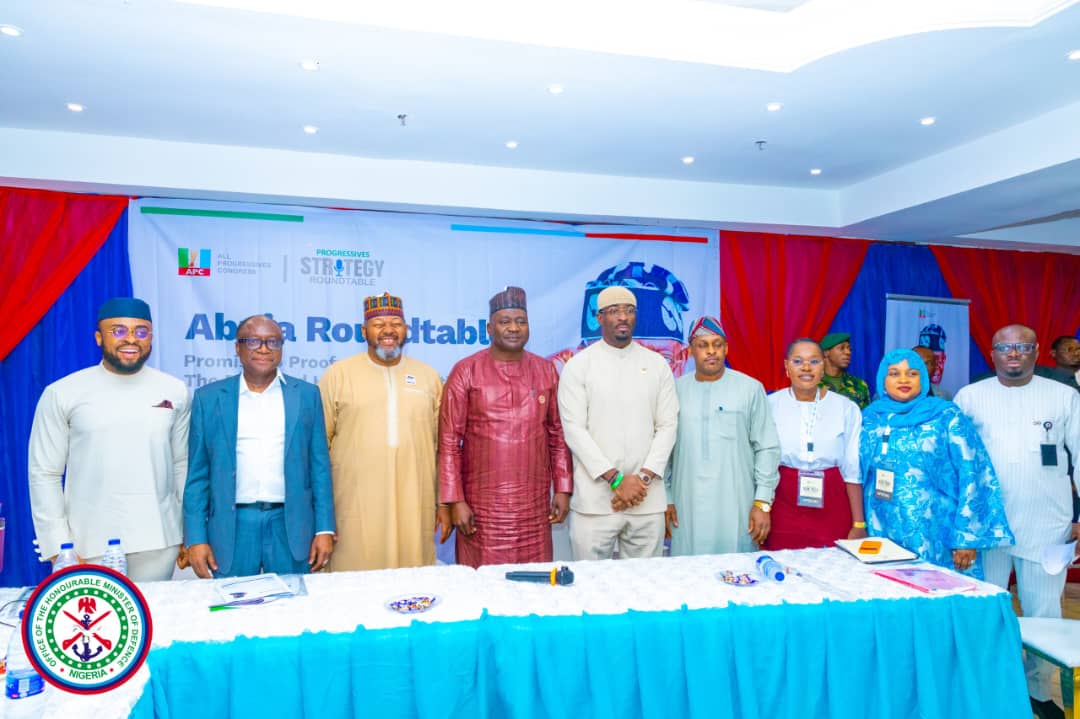
The Minister made the call while speaking as a panellist at the Abuja Round Table, themed “Promise to Proof: The Renewed Hope Conversation,” during a session titled “Safe to Farm, Travel and Trade: Protecting Lives and Livelihoods in Every Community.”
According to a statement issued on Wednesday by his Special Assistant on Media, Leah Katung-Babatunde, Musa described the removal and destruction of tollgates across the country as a strategic mistake, noting that such facilities serve important security functions in other countries.
He explained that technological advancements had made it possible to operate tollgates without cash transactions, thereby eliminating some of the abuses associated with the previous system.
“With modern Information and Communications Technology (ICT) and automation, toll collection no longer requires cash transactions,” the Minister said.
He added that automated systems could instantly capture vehicle registration numbers, monitor movements across interstate highways and provide useful information for tracing suspects.
Musa also called for the establishment of a streamlined and reliable national identification system, stressing that integrating unique identification numbers, facial recognition and biometric data would help address identity-related security challenges.
He said a centralised digital identification architecture would close existing security loopholes and improve real-time intelligence gathering across the country.
On military deployment, the Defence Minister explained that although the constitutional responsibility of the Armed Forces was to defend Nigeria’s territorial integrity, the military had been required to support internal security operations whenever security challenges exceeded the capacity of the police.
However, he expressed concern over the prolonged deployment of military personnel for internal security duties, which he said had subjected troops to fatigue and prolonged separation from their families.
He noted that efforts were underway to strengthen police recruitment, training and operational capacity to enable the police to take greater responsibility for internal security.
According to him, the objective was to gradually reduce military involvement in internal security operations, allowing troops to return to their primary constitutional responsibilities.
The Minister also stressed that Nigeria’s security challenges could not be addressed solely through increased military firepower, identifying national disunity and divisions among citizens as major obstacles to lasting peace.
He urged Nigerians to rise above ethnic, religious and regional differences, insisting that national unity remained critical to the country’s security architecture.
“We must begin to view one another simply as human beings and fellow citizens, rather than dividing ourselves along ethnic, regional, or religious lines,” he said.
Musa reaffirmed the Federal Government’s commitment, under the Renewed Hope Agenda, to creating an environment where Nigerians could safely farm, travel and conduct business in every part of the country.