
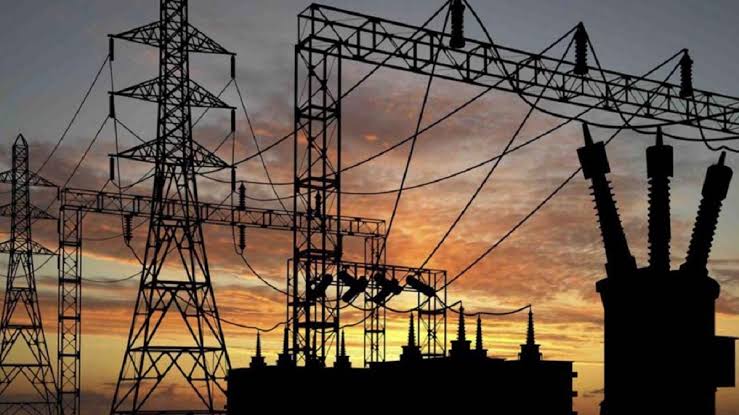
Fresh financial disclosures show a 6.3 per cent increase in energy spending by industrial companies on the NGX in the first nine months of 2026, with cement manufacturers accounting for the bulk of the expenditure as unreliable electricity supply and higher fuel prices continue to squeeze businesses……
Nigeria’s industrial sector is facing renewed cost pressures after major manufacturing companies listed on the Nigerian Exchange Limited (NGX) collectively spent N820.7 billion on fuel and electricity between January and September 2026.
The latest figures, obtained from the companies’ unaudited financial statements, represent a 6.3 per cent increase compared with the N771.9 billion recorded during the corresponding period last year.
The rising expenditure highlights the growing burden of energy supply on manufacturers, particularly businesses whose production processes depend heavily on diesel, gas and electricity to maintain operations.
Companies covered by the figures include Dangote Cement, BUA Cement, Beta Glass, Berger Paints Nigeria, Chemical and Allied Products (CAP), HBM Nigeria and Austin LAZ and Co.
An examination of their financial disclosures shows that cement producers accounted for the largest share of the industry’s energy bill, reflecting the substantial power requirements involved in cement production.
Dangote Cement recorded the highest expenditure, spending N580.5 billion on fuel and power during the nine-month period, representing a 2 per cent increase from the N569 billion reported in 2025.
BUA Cement also recorded a significant rise, with its energy costs climbing by 21.5 per cent to N216.6 billion from N178.2 billion in the previous year.
Together, the two manufacturers accounted for N797.1 billion of the total expenditure, up 6.7 per cent from N747.2 billion recorded in the corresponding period of 2025.
The figures underline the extent to which energy consumption is shaping the cost structure of Nigeria’s cement industry, where uninterrupted power supply remains essential to production.
However, not all industrial companies recorded higher energy bills.
Beta Glass reported a 5.3 per cent reduction in fuel and power costs to N23.2 billion, compared with N24.5 billion a year earlier.
Chemical and Allied Products also recorded a decline, with expenditure falling by 20.4 per cent from N38 billion to N30.3 billion.
Austin LAZ and Co, on the other hand, saw its energy expenses rise sharply from just N50,000 in 2025 to approximately N10.9 million in the first nine months of 2026.
Although the percentage increase was put at 22,046.9 per cent, the company’s actual expenditure remained relatively small compared with the larger industrial players.
HBM Nigeria, formerly Lafarge Africa, disclosed production variable costs of N226.3 billion but did not provide a separate breakdown of its energy expenses.
Beyond the figures reported by individual companies, industry experts say the rising cost of energy is becoming an increasingly difficult burden for Nigerian manufacturers to absorb.
With many Nigerian households already struggling with high living costs, manufacturers could find it difficult to increase prices without risking lower demand and losing market share.
Unreliable electricity supply pushes factories towards captive power
Nigeria’s persistent electricity challenges have also increased manufacturers’ dependence on alternative energy sources, adding another layer of expenditure to industrial operations.
A Manufacturers Association of Nigeria (MAN) report showed that manufacturers spent N1.34 trillion on alternative power sources in 2025, representing a 21 per cent increase from the N1.11 trillion recorded in 2024.
The spending covered diesel, gas and other independent electricity generation arrangements used by businesses to keep production running despite unreliable grid supply.
For many manufacturers, relying entirely on electricity distribution companies is no longer considered a viable option, particularly where repeated outages could disrupt production schedules, damage equipment and lead to significant financial losses.
Major industrial operators have consequently invested in captive power facilities to guarantee more stable electricity for their factories.
Dangote Cement, for instance, has an installed captive generation capacity of at least 345 megawatts across its four Nigerian plants.
BUA Cement operates an estimated 240MW to 280MW of generation capacity, largely powered by gas, while HBM Nigeria has at least 200MW of captive electricity generation capacity.
Although these investments help reduce dependence on the national grid, they also expose manufacturers to fluctuations in the prices and availability of the fuels required to operate their facilities.
The shift towards self-generation also presents challenges for electricity distribution companies, as large industrial consumers represent an important segment of their revenue base.
Data from the Nigerian Electricity Regulatory Commission showed that the country’s 11 distribution companies billed customers approximately N2.01 trillion between January and August 2026, while collections stood at about N1.63 trillion, representing a collection efficiency of roughly 81 per cent.
Power sector weaknesses continue to weigh on industrial output
The pressure on manufacturers is further complicated by longstanding problems within Nigeria’s electricity supply chain.
An earlier report published in March 2026 highlighted how financial and contractual disagreements between electricity generation companies and gas suppliers had disrupted fuel deliveries to power plants, worsening grid instability and power outages.
Mounting debts, foreign exchange difficulties and infrastructure limitations have also continued to affect the availability of gas for electricity generation.
Gas-fired power plants account for more than 70 per cent of Nigeria’s electricity generation, with their contribution rising above 80 per cent during certain periods.
This dependence means disruptions in gas supply can quickly affect electricity production and worsen the difficulties faced by businesses that rely on the national grid.
For industrial manufacturers, the consequences extend beyond higher fuel bills. Unstable electricity supply can disrupt production targets, increase maintenance costs, affect delivery schedules and reduce the competitiveness of locally manufactured products.
With energy expenditure already running into hundreds of billions of naira among listed industrial companies, the latest financial disclosures raise fresh questions about the sustainability of manufacturing costs in Nigeria.
Unless electricity supply becomes more reliable and energy prices more predictable, manufacturers may continue to devote an increasing share of their resources to keeping their factories operational rather than expanding production capacity, creating jobs and investing in growth.