Two Filipino Sailors Killed in Attack on Saudi Oil Tanker in Strait of Hormuz

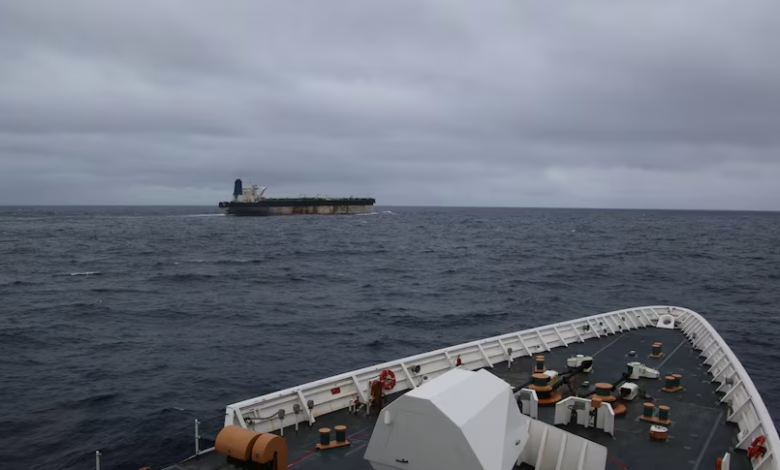
Two Filipino sailors have been killed after a Saudi oil tanker came under attack while transiting the Strait of Hormuz, in the latest escalation of tensions threatening one of the world’s most critical oil shipping routes.
Saudi Arabia’s national shipping company, Bahri, confirmed that its vessel, SIDR, was involved in a security incident late Monday while passing through the strategic waterway.
The company said two of its Filipino seafarers lost their lives in the incident.
The development came after maritime security firm Marisks reported that the SIDR and another oil tanker, the Liberia-flagged Senegal Prosperity, were struck by unidentified projectiles within minutes of each other while attempting to exit the Strait of Hormuz.
The two very large crude carriers had each loaded about two million barrels of Saudi crude at the Juaymah terminal on Saudi Arabia’s eastern coast last week, according to Kpler data.
The latest attacks have heightened concerns over the safety of commercial shipping through the Strait of Hormuz, a vital global energy corridor through which a significant share of the world’s oil supplies normally passes.
The incident also comes amid renewed military confrontation between the United States and Iran, with Washington intensifying attacks on Iranian targets and Tehran retaliating against US positions and interests across the Gulf.
Iran has sought to restrict shipping through the strategic waterway, demanding fees from vessels using the route and accusing some commercial ships of attempting to bypass its preferred transit corridor.
The heightened tensions have already disrupted maritime traffic, with the number of commercial vessels passing through the Strait of Hormuz falling sharply below normal levels.
The latest attacks are likely to further intensify concerns among shipping companies, energy traders and major oil-importing nations over potential disruptions to global crude supplies.
The Strait of Hormuz has long been regarded as one of the world’s most strategically important maritime chokepoints, making any sustained disruption a potential threat to global energy markets.
With the conflict between Washington and Tehran showing no immediate signs of easing, the latest deaths underscore the growing risks facing commercial vessels and their crews navigating the increasingly volatile waterway.