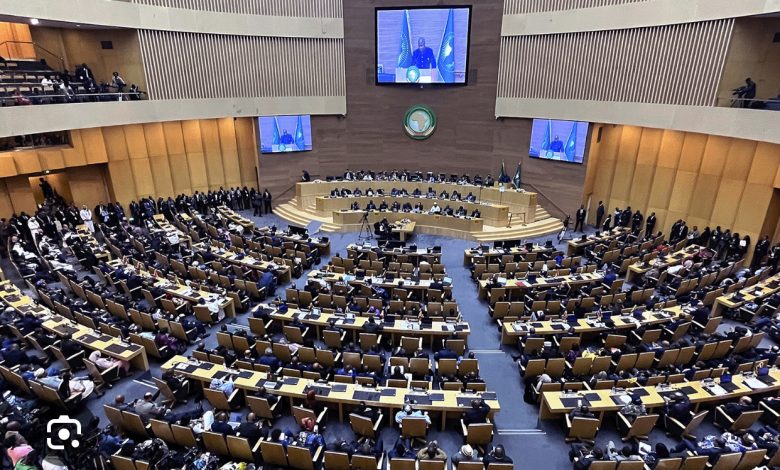
Nigeria has taken over the leadership of the African Union Peace and Security Council (PSC) for May 2026, marking its return to the top position of the continental security body for the first time since December 2022.
In a statement issued on Friday, the Ministry of Foreign Affairs said the development reflects Nigeria’s sustained role within the Council and its experience in continental peace and security affairs. It noted that Nigeria’s continuous membership since the establishment of the PSC in 2004 gives it a strong institutional edge and historical perspective.
During its chairmanship, Nigeria is expected to preside over discussions on a wide range of security, peacebuilding, and governance issues affecting Africa, with particular attention on crisis hotspots in West Africa and the Sahel region.
Key matters on the agenda include the growing impact of climate change on instability in the Lake Chad Basin and Sahel, as well as coordinated continental efforts to tackle transnational organised crime networks.
The Council will also deliberate on the draft five-year African Union Continental Counter-Terrorism Strategic Plan of Action, alongside measures to reinforce collective security mechanisms such as the African Standby Force.
Maritime insecurity is also expected to feature prominently, with talks on strengthening efforts to curb piracy in the Gulf of Guinea through the Combined Maritime Task Force initiative.
The PSC serves as one of the African Union’s principal decision-making organs on peace and security, mandated to prevent, manage, and resolve conflicts across the continent. It is composed of 15 member states elected by the AU Executive Council and endorsed by the Assembly.
Membership is rotational, with states serving either two- or three-year terms based on regional representation, while the chairmanship rotates monthly in alphabetical order among members.
Current members include Nigeria, Benin, Gabon, Algeria, Lesotho, Morocco, Somalia, South Africa, Côte d’Ivoire, the Democratic Republic of Congo, Sierra Leone, Uganda, Ethiopia, Cameroon, and Eswatini.