$40bn investment drive signals push to cut imports, boost jobs, and reshape Africa’s industrial future…..
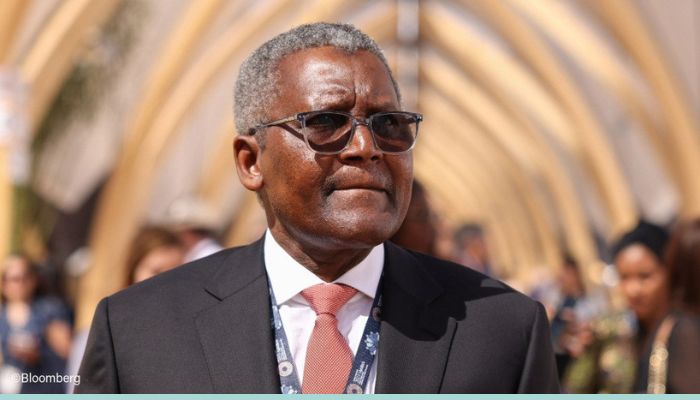
Africa’s richest man, Aliko Dangote, has revealed plans to construct a massive 650,000 barrels-per-day oil refinery in East Africa matching the scale of his landmark facility in Nigeria as part of an ambitious strategy to expand industrial capacity across the continent.
The announcement was made on Thursday in Nairobi during a high-level summit that brought together political leaders, investors, and industry players to tackle Africa’s pressing energy and infrastructure challenges.
Addressing William Ruto and Yoweri Museveni, Dangote made it clear that while the vision is bold, its success hinges on strong political will and stable policy environments.
He disclosed that the proposed refinery is part of a wider investment push worth $40 billion, spanning multiple sectors through to 2030. Offering a direct commitment to the leaders present, he said his group is prepared to replicate the Nigerian refinery in East Africa, provided there is sufficient government backing.
While still in its early stages, Dangote expressed little doubt about the project’s viability, insisting that there are no real barriers to its execution if the right support systems are in place.
A Call to End Import Dependence
Beyond the refinery itself, Dangote used the platform to press a broader argument: Africa must break free from its long-standing reliance on imports and instead build strong domestic industries.
According to him, exporting raw materials while importing finished goods creates a damaging cycle, one that shifts jobs abroad and weakens local economies. He stressed that sectors such as refining, fertiliser production, and petrochemicals hold the key to reversing this trend and unlocking large-scale employment.
The planned East African refinery is one piece of that larger puzzle, aimed at strengthening regional self-sufficiency and reducing vulnerability to global supply disruptions.
Mounting Pressure from Fuel Demand
The timing of the announcement is significant. A report by the Africa Finance Corporation presented at the summit warned that Africa could face a fuel shortfall of up to 86 million tonnes by 2040.
Currently, the continent imports more than 70 percent of its refined fuel and spends an estimated $230 billion annually on key imports, including energy and industrial goods. Demand for fuel imports is expected to rise steadily, further exposing structural weaknesses in local production capacity.
The projected deficit is equivalent to nearly three refineries the size of the Dangote Refinery highlighting the scale of the challenge ahead.
Leaders Push for Economic Reset
President Ruto echoed Dangote’s concerns, warning that Africa’s economic ambitions may remain out of reach if the continent continues to depend heavily on exporting raw materials.
He argued for a shift toward value addition and industrialisation, noting that the current model limits job creation and economic resilience.
The summit also drew attention to the fragility of Africa’s energy systems, which remain highly exposed to global shocks and constrained by infrastructure gaps.
Beyond Oil: A Wider Industrial Play
Dangote’s vision extends well beyond refining. He pointed to ongoing and planned investments in fertiliser production and petrochemicals, including efforts to expand urea output and establish blending plants in underserved markets.
With consistent government support, he said, Africa has the potential to achieve self-sufficiency in key industrial sectors transforming from a net importer into a competitive global producer.
For Dangote, the refinery proposal is not just another project; it is part of a broader mission to redefine Africa’s economic trajectory.
His message was simple but emphatic: the continent has the resources, the talent, and the opportunity it now needs the resolve to build at scale.