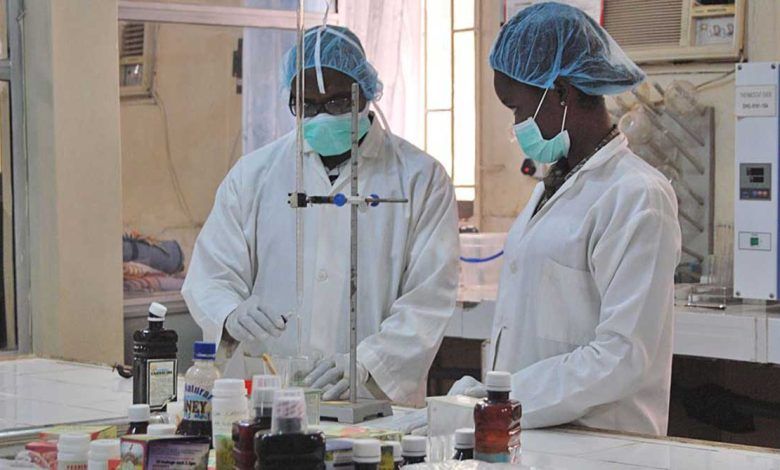
The Deputy Director of Medical Laboratory Services at the National Hospital, Abuja, Emmanuel Akhaumere has emphasized the urgent need to raise public awareness about proper blood collection practices and the critical role of early cancer detection.
Speaking during the OncoSeek Cancer Training for Journalists, an initiative aimed at equipping media professionals with a deeper understanding of cancer diagnostics Akhaumere highlighted the importance of informed healthcare reporting. The event was themed “Effective Reporting of OncoSeek as an AI-Predictive Early Cancer Diagnostic Tool.”
Akhaumere underscored the hospital’s commitment to utilizing advanced diagnostic technologies to enhance Nigeria’s healthcare system and align local practices with global standards, particularly in the early detection of cancer.
“We are not suggesting that patients replace medical professionals,” he clarified. “But when patients are well-informed about proper procedures, such as blood collection, they can help prevent errors. Knowledge truly is power.”
He warned that simple mistakes, like misidentifying a patient or drawing blood from the wrong site, could compromise test results and, in serious cases, endanger lives.
A highlight of the training was a detailed explanation of the **Cobas E411 analyser**, a state-of-the-art diagnostic machine that operates on electrochemiluminescence principles. Akhaumere likened its precision to locating a single individual in a population of 1.4 billion—without an address.
“This machine represents a significant leap in diagnostic capability,” he said. “Tests that once took a full day can now be completed in just 18 minutes per tumour marker, with a throughput of up to 180 tests per hour.” He added that the Cobas E411, which uses Arcasex reagents, has become essential for cancer marker analysis at the National Hospital due to its speed, accuracy, and user-friendly design.
Akhaumere shared a powerful anecdote about a patient who had their test results from the National Hospital verified by a U.S. cancer centre, underscoring the growing credibility and reliability of diagnostic services in Nigeria.
Stressing the life-saving benefits of early detection, he explained that cancers caught in their early stages are often highly treatable. For instance, early-stage cervical cancer can be entirely removed through a minor procedure such as a loop biopsy, potentially sparing patients from more invasive treatments later on.
“If we catch changes in the cervix during routine screening, we can intervene immediately and, in many cases, eliminate the risk of cancer for life,” he explained. The same principle, he said, applies to breast and other common cancers.
The event also emphasized the need for widespread public advocacy to encourage early presentation and screening. Akhaumere highlighted the critical role of responsible health journalism in raising awareness, dispelling myths, and promoting timely healthcare-seeking behaviour.