
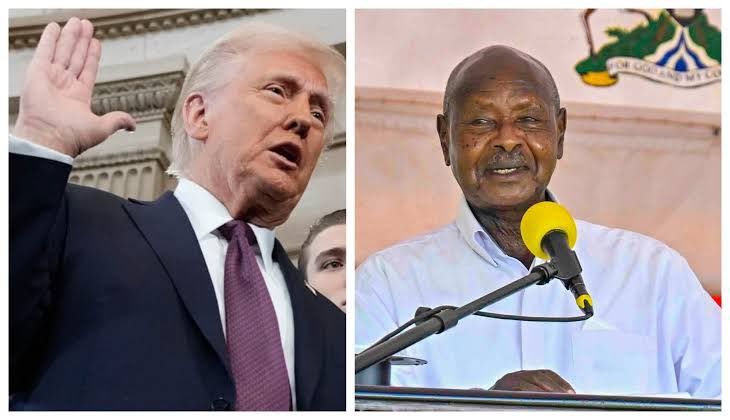
Uganda has reached a temporary agreement with the United States to receive deportees from third countries who have been denied asylum but are unwilling to return home, according to a statement from the country’s Ministry of Foreign Affairs.
The ministry’s permanent secretary, Bagiire Vincent Waiswa, said Uganda will not accept deportees with criminal records or unaccompanied minors. He added that Kampala prefers the individuals transferred under the deal to be of African origin.
“The two parties are working out the detailed modalities on how the agreement shall be implemented,” Waiswa noted, without disclosing whether Uganda would receive financial or logistical support, or specifying the number of deportees expected.
The deal makes Uganda the latest partner in Washington’s sweeping efforts to expel undocumented migrants, asylum seekers, and foreigners with criminal convictions.
In July, five migrants from Vietnam, Jamaica, Laos, Yemen, and Cuba—whom US authorities said were convicted of serious crimes—were flown to Eswatini, where they remain in a high-security prison. The deportations are now being contested in court by Swazi and regional human rights groups.
That same month, eight men were deported to South Sudan after being held for weeks in a shipping container in Djibouti, while more than 250 Venezuelans were sent back to their home country following a controversial stopover in El Salvador.
Meanwhile, Rwanda has announced it will take in 250 deportees from the US, promising workforce training, healthcare, and accommodation to help them restart their lives.
Uganda, a longstanding US ally, has a history of receiving deportees. Between 2015 and 2018, it took in around 1,700 Sudanese and Eritrean asylum seekers relocated from Israel. Today, it hosts nearly 2 million refugees and asylum seekers, mostly from conflict-torn countries in East and Central Africa.
Yet the new deal has stirred debate at home. While Uganda has built a reputation as a hospitable destination for displaced people, rights advocates warn the government has a poor record of protecting political dissidents.
Godwin Toko, deputy director of Agora, a Ugandan democracy and human rights think tank, told reporters:
“Uganda doesn’t have the economic or military leverage to dictate terms to the US. What it does is play the role of a ‘good ally’ to gain favor. But if among the deportees there is, say, a Kenyan or South Sudanese dissident, Uganda could easily hand them over to their government the very next day.”
Adding to the confusion, a Ugandan official on Wednesday denied that any deal had been finalized, saying the country lacked facilities and infrastructure to accommodate migrants.
The denial followed a CBS News report citing internal documents that claimed the White House had struck deportation agreements with both Uganda and Honduras.
The deal comes under the shadow of President Yoweri Museveni’s 40-year rule, during which opposition figures have often faced imprisonment.
Critics argue that while Uganda’s refugee record is commendable, its politics make it a risky destination for individuals fleeing persecution.


