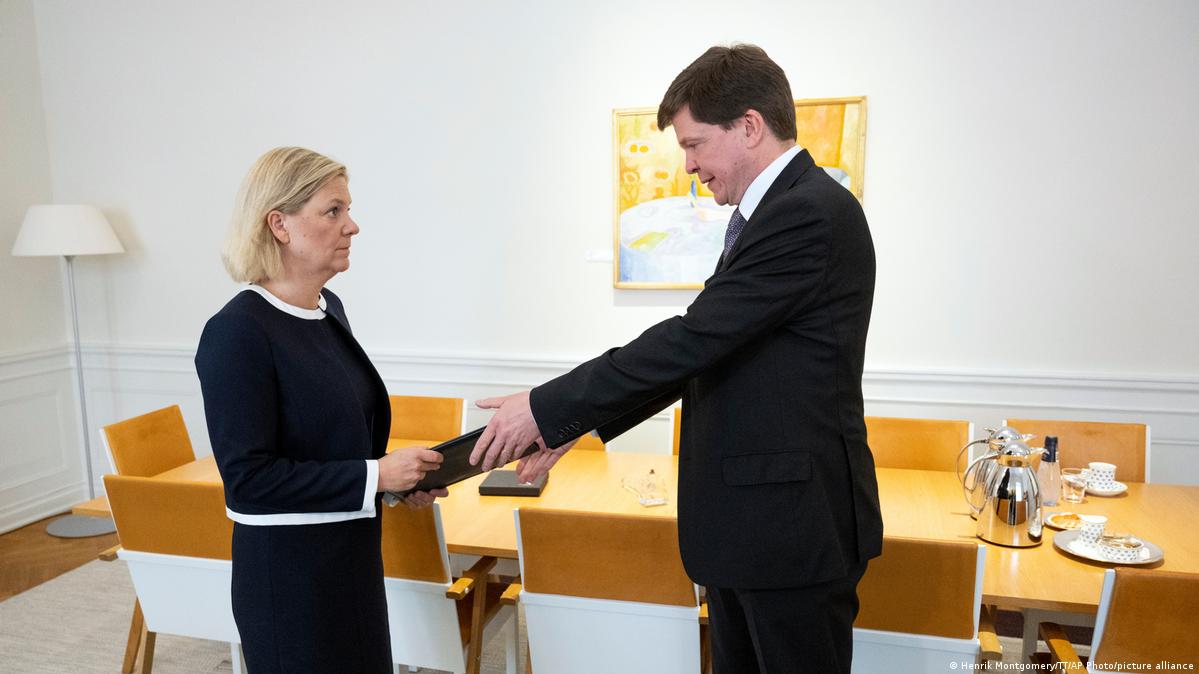
Swedish Prime Minister Ulf Kristersson has resigned after the final results of the country’s parliamentary election confirmed a narrow victory for the centre-left opposition.
The four opposition parties led by former Prime Minister Magdalena Andersson secured 176 seats in the 349-member Riksdag, while the parties supporting Kristersson’s conservative-led government won 173 seats — a margin of just three seats.
Kristersson announced his resignation on Thursday after the final count was completed, clearing the way for the next stage of government formation. The election was closely fought, with only about 50,000 votes separating the two blocs.
The result puts former Prime Minister Magdalena Andersson and the Social Democrats at the centre of efforts to form the next government. However, the narrow parliamentary balance means negotiations among the opposition parties will be crucial to determining the shape of the new administration.
Kristersson’s government had relied on parliamentary support from the Sweden Democrats, an anti-immigration party that had been expected to gain a greater role in government if the right-wing bloc retained power. The Sweden Democrats, however, recorded a decline in seats in the election.
Sweden’s political system commonly produces coalition or minority governments, with parties negotiating support across the 349-member parliament.
Following Kristersson’s resignation, the Speaker of the Riksdag will consult the parliamentary parties before proposing a candidate for prime minister. The Riksdag will then vote on the nominee as negotiations continue over the formation of a new government.
The outcome leaves Andersson’s bloc with a narrow parliamentary majority, but forming a governing coalition will require negotiations among parties with differing positions.