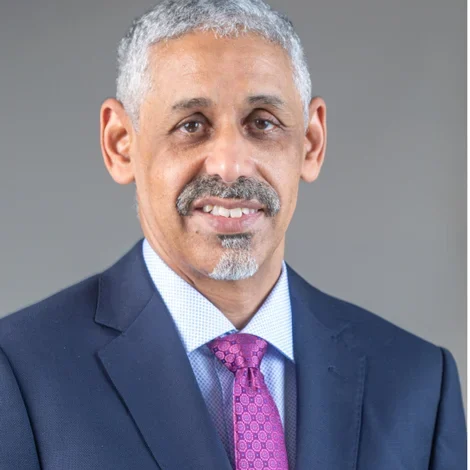
Mauritania’s former economy minister, Sidi Ould Tah, has been elected president of the African Development Bank (AfDB), taking over from Nigeria’s Akinwumi Adesina at a time when the institution faces significant geopolitical and financial headwinds including the threat of losing critical U.S. funding.
Unlike his predecessor, who needed six voting rounds to secure the top job in 2015, Tah, 60, clinched the presidency in just three, with a commanding 76.18 percent of total votes from the bank’s 81 member countries. He also secured 72.37 percent of the African vote, meeting the dual majority threshold required for victory.
Tah’s nearest rival, Zambian economist Samuel Munzele Maimbo, trailed with 20.26 percent, while Senegal’s Amadou Hott placed a distant third with just 3.55 percent of the vote.
Tah brings a decade of experience as the head of the Arab Bank for Economic Development in Africa (BADEA), a background observers believe could serve as a vital bridge between North and sub-Saharan Africa. With several North African countries represented in the AfDB, his leadership may foster stronger continental cohesion in an increasingly polarized global financial environment.
In his candidacy pitch, Tah laid out an ambitious agenda focused on asserting Africa’s financial sovereignty, reinforcing regional financial institutions, leveraging population growth as an asset for development, and building infrastructure that can withstand the shocks of climate change. His message resonated with the bank’s Governors, especially amid fears that Africa’s voice could be further marginalized on the global stage.
Reacting to the outcome, Maimbo congratulated Tah and reaffirmed his commitment to Africa’s development. “I entered this race driven by love and deep concern for our continent, and offered a vision for Africa’s future. Today, the Governors have chosen the leader they believe will best deliver the vision of the Africa we want at this pivotal moment,” he said in a statement.
The AfDB, established in 1964, is one of the world’s largest multilateral development institutions. It draws funding from member subscriptions, repayments, and capital raised in global financial markets. However, the bank now faces a troubling new reality: the possible loss of $500 million in U.S. funding, amid a broader retrenchment in global economic engagement from the United States under the Trump administration.
All five candidates in this year’s race pledged to deepen the AfDB’s impact and build on the legacy of outgoing president Akinwumi Adesina, whose tenure was marked by expansive reforms and bold targets under the banner of the “High 5” agenda: Light up and power Africa, Feed Africa, Industrialise Africa, Integrate Africa, and Improve the quality of life for Africans.
In his farewell speech, Adesina reflected on a decade of transformation. “I am proud of the legacy we are leaving behind… for the bank and for Africa,” he said. Under his leadership, the AfDB’s capital more than tripled from $93 billion to $318 billion, and projects under the bank’s portfolio are estimated to have benefited 565 million people.
Some of the flagship projects during Adesina’s leadership include the Gabal El Asfar wastewater treatment plant in Egypt, the bridge linking Senegal and The Gambia, expansion of the port of Lomé in Togo, improvements to sanitation in Lesotho, and increased electricity access in Kenya.
As Tah prepares to take over, he inherits not only an expanded institution but also a set of complex challenges. The global financial landscape is shifting, and Africa’s development needs are intensifying amid climate risks, population pressures, and a potentially less cooperative international donor environment.
But with deep institutional knowledge and a proven track record at BADEA, Tah is stepping into the role with both legitimacy and momentum. Now, the task before him is to translate that promise into action and prove that the AfDB remains not just Africa’s bank, but one of the world’s most vital development engines.