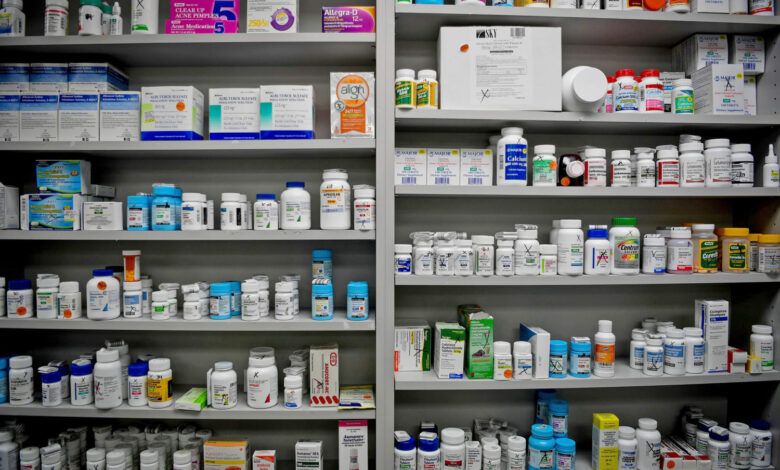
The Pharmaceutical Society of Nigeria (PSN), Lagos State Branch, has accused the Federal Government and the National Agency for Food and Drug Administration and Control (NAFDAC) of exacerbating an alarming rise in medicine prices, describing government measures as ineffective and poorly implemented.
In a statement to that President Bola Tinubu’s June 2024 executive order, the state chairman of PSN, said Oyekunle Babayemi, which removed tariffs, excise duties and VAT on pharmaceutical inputs, “has failed completely” and is worsening the country’s pharmaceutical crisis.
Quoting a recent report that has labelled the order “sick and stranded,” he argued the measure was flawed from the start because it did not tackle core drivers of price inflation: heavy dependence on imports and regulatory bottlenecks.
Babayemi singled out NAFDAC for imposing what he called exploitative fees on importers and manufacturers.
He said the agency’s Good Manufacturing Practice (GMP) inspection regime requires each Nigerian importer to pay separately for the same foreign site visit, a practice he says has discouraged competition and pushed many small businesses out of the market.
He gave the following figures: the first company pays $10,989.01 for a site visit, while subsequent companies are charged an additional $5,000 each under NAFDAC’s “risk-based desk review.” Paying for desk reviews of already inspected facilities, he said, is a “monumental injustice.”
“This is no longer regulation; it is revenue generation at the cost of public health,” Babayemi said, warning that the fee structure is creating an unhealthy market that favors monopolies and drives up prices.
He also blamed prolonged registration timelines and NAFDAC’s proposed Track and Trace policy, which would require complete repackaging of existing products, as further contributors to rising costs. “Implementing the Track and Trace system would increase drug prices by another 70 per cent to 85 per cent. This is suicidal in a country where patients are already struggling to access basic medicines,” he warned.
Babayemi criticised NAFDAC for appearing more intent on meeting international benchmarks than on making medicines affordable. He noted that India, which supplies over half of Nigeria’s drugs, is on WHO’s ML1 list while Nigeria remains ML3, arguing that adopting international standards without adapting them to local realities is misguided.
While acknowledging some positive intent in government policy, Babayemi insisted that without structural reforms to regulation and enforcement, drug prices will continue to climb, putting millions of Nigerians at risk.