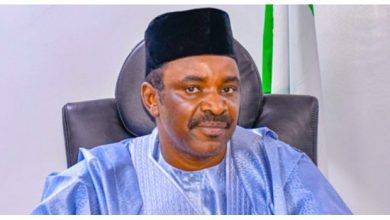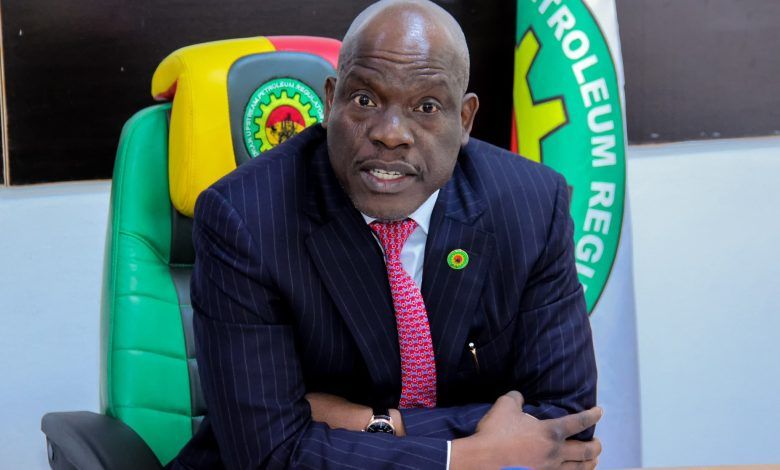
The Chief Executive Officer of the Nigerian Upstream Petroleum Regulatory Commission (NUPRC), Gbenga Komolafe, has highlighted Africa’s need for over $600 billion annually in upstream oil and gas investments to meet its rapidly growing energy demands. He further emphasized that Nigeria is strategically prepared to attract a significant portion of this vital capital inflow to help power the continent’s sustainable development.
Komolafe made the remarks during his address at the 2025 Africa Energies Summit in London, where Nigeria presented new initiatives designed to attract investors and enhance exploration within its upstream oil and gas sector. A copy of his speech was obtained by our correspondent on Thursday.
The NUPRC CEO noted that Nigeria’s transparent bid rounds in 2022 and 2024 have positioned the country as a global hub for oil and gas investment. These efforts have redefined Nigeria as a resilient, reform-driven, and investment-ready nation, central to Africa’s energy transformation.
Citing a 2023 study by the International Energy Forum, Komolafe stressed that Africa’s energy demand is projected to grow by 30% by 2040 due to factors such as population growth, industrialization, and the pursuit of universal energy access. To meet these growing energy needs, the continent will require a staggering $600 billion in annual upstream investments through 2030.
Despite the global shift toward decarbonization, Komolafe reminded the summit that hydrocarbons will continue to play a pivotal role in the global energy mix. He referenced the BP Energy Outlook 2024, which forecasts that fossil fuels will still account for over 50% of the world’s energy by 2050.
“As the world moves towards a low-carbon future, projections from BP’s Energy Outlook 2024 remind us that hydrocarbons will still supply more than half of global energy needs by 2050. In Africa, the demand for energy is expected to surge by 30% by 2040, driven by population growth, industrial ambitions, and the quest for universal energy access. Meeting these demands sustainably requires over $600 billion in upstream investments annually through 2030,” Komolafe said.
He emphasized that this investment is crucial not only for meeting Africa’s growing energy needs but also for achieving sustainable development. He added that the global community is increasingly recognizing that the path to net-zero emissions must be inclusive and region-specific, and for Africa, this path must be aligned with development and universal energy access.
Komolafe also outlined the success of Nigeria’s recent bidding rounds, which have reshaped the country’s energy sector. The 57 Petroleum Prospecting Licenses (PPLs) awarded in 2022, the 2022 mini-bid round, and the 2024 licensing round have all been conducted with unprecedented transparency, competitiveness, and investor engagement. These initiatives have significantly bolstered Nigeria’s reputation as a prime destination for oil and gas investments.
“Our oil and gas sector has experienced a significant surge in investment. New investors, empowered by clarity and quality, are entering our market, leading to an increase in reserves and production. Rig counts have surged from eight in 2021 to 36 currently, with projections to reach 50 by the end of the year,” Komolafe revealed.
Nigeria’s vast reserves, which include 210.54 trillion cubic feet of natural gas the largest in Africa and 37.28 billion barrels of crude oil, position it as a key player in the global energy landscape. The success of these efforts has been largely attributed to the Petroleum Industry Act (PIA) of 2021, which has provided certainty and high-quality geological and technical data to support the sector.
Komolafe also underscored Nigeria’s ambitious national production target of 3 million barrels per day, stressing that continuous investment is necessary to unlock new basins and mature frontier fields to meet future energy needs. He mentioned the NUPRC’s data acquisition and reprocessing campaign, which includes over 11,000 square kilometers of 3D seismic data as part of the broader 56,000 square kilometer Awalé Project. This initiative is part of Nigeria’s broader strategy to secure its energy future and continue to meet the rising demand for oil and gas.
Through these efforts, Nigeria is positioning itself as a leading energy player, with the potential to play a pivotal role in powering Africa’s growth sustainably.