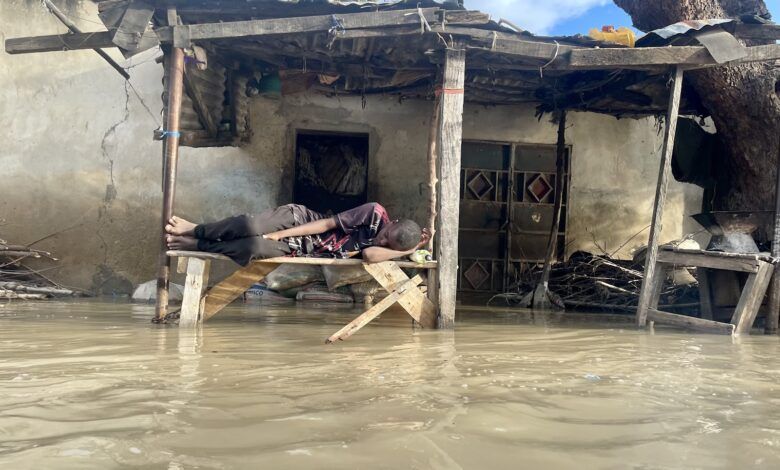
Agency says recurring floods can be prevented through better environmental practices as officials assess communities hit by Thursday’s disaster…..
The National Emergency Management Agency (NEMA) has linked the recurring flooding in Cross River State to poor environmental sanitation, warning residents to stop dumping refuse into drainage channels and waterways to reduce the risk of future disasters.
The warning came on Friday as officials from NEMA’s Uyo Operations Office visited communities affected by Thursday’s devastating flood in Calabar Municipality and Calabar South Local Government Areas to assess the extent of the damage.
The heavy rainfall, which lasted for several hours on July 9, left several communities submerged, displaced residents, destroyed property and reportedly claimed two lives. Others who sustained injuries during the incident are receiving medical treatment.
Leading the assessment team, the Head of Operations at NEMA’s Uyo Office, Mrs Aisueni Mmandu, urged residents to take greater responsibility for protecting their surroundings, stressing that human activities continue to worsen the flooding experienced in many parts of the state.
According to her, indiscriminate disposal of refuse particularly plastic waste and other non-biodegradable materials has continued to block drainage systems, preventing the free flow of floodwater during heavy rainfall.
She advised residents to make proper use of designated waste disposal facilities instead of turning drains and waterways into dumping sites.
“You must know that you are your environment. Communities must adopt responsible environmental practices to reduce recurring flooding and prevent avoidable loss of lives and property,” Mmandu said.
She added that many flood incidents could be avoided if residents embraced safer environmental habits, noting that blocked drainage channels remain one of the leading causes of urban flooding.
As part of efforts to reduce future disasters, Mmandu disclosed that NEMA would expand its flood awareness campaign across all 18 local government areas of Cross River State through community sensitisation programmes and partnerships with relevant stakeholders.
She also announced plans to provide flood preparedness jingles and educational materials in local languages to improve public understanding of flood prevention and emergency response.
To strengthen disaster management, the NEMA official proposed the creation of a multi-agency WhatsApp platform involving relevant ministries, departments and agencies to facilitate faster information sharing and coordinated emergency responses.
She further called on the Cross River State Ministry of Environment and the National Orientation Agency to intensify public enlightenment campaigns through local government councils and community engagements.
Meanwhile, the Director-General of the Cross River State Emergency Management Agency (SEMA), Efa Nyong, assured affected residents that relief support would be provided after officials complete ongoing assessments of the affected communities.
He said both the Federal Government, through NEMA, and the Cross River State Government remain committed to assisting victims of the flood.
Also speaking, the Director of Flood and Erosion Control in the Cross River State Ministry of Environment, James Ekabua, explained that many of the affected communities are located on natural flood plains, making them especially vulnerable during periods of heavy rainfall.
He added that rapid urbanisation, blocked drainage systems and other human activities have further increased the flood risk, noting that the government’s next intervention would be guided by professional assessments.
For residents of Big Qua Community, however, the flooding has become a recurring nightmare.