The Lagos State Government has issued an urgent advisory to residents in flood-prone communities, urging them to relocate to higher ground immediately as the city prepares for intensified rainfall in 2025.
The warning comes from Commissioner for the Environment and Water Resources, Tokunbo Wahab, who cited recent flood projections from the Nigerian Meteorological Agency (NiMet).
According to NiMet, Lagos is expected to experience significantly more rainfall in 2025 compared to previous years, increasing the risk of flash floods across vulnerable zones.
Speaking on a live television programme, Wahab identified Lekki, Ikorodu, Ajegunle, and Isheri (OPIC axis) as high-risk areas, urging residents to remain vigilant and take immediate precautionary measures.
“This is not the time for complacency,” Wahab warned. “We are asking residents in low-lying and waterlogged communities to relocate now to avoid avoidable loss of lives and property.”
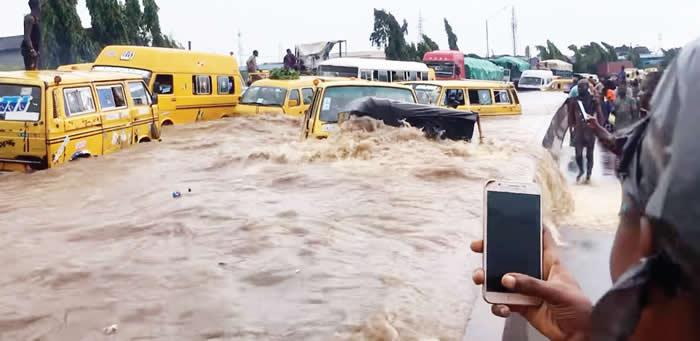
His comments follow Monday’s intense flooding across several parts of the city, after uninterrupted rainfall that began Sunday night.
Viral videos from affected neighborhoods showed homes, cars, and streets submerged under murky floodwaters, with residents wading through overflowing drainage systems.
Despite the alarming scenes, the commissioner assured Lagosians that the state government has been proactively addressing flood risks.
He disclosed that the government invested over ₦15 billion in drainage infrastructure in 2024, and that ongoing efforts—such as clearing blocked channels and expanding water pathways—aim to reduce the impact of the coming rains.
“We’ve stepped up our response to climate realities,” Wahab said. “But residents must also do their part—avoid dumping waste in drains, adhere to building codes, and move out of flood-prone zones when advised.”
The state’s emergency agencies have also been placed on high alert to respond swiftly to any environmental crisis during the rainy season.
As Lagos continues to battle the dual challenges of rapid urbanization and changing climate patterns, authorities say early action and public cooperation remain key to preventing future disasters.