Israel’s election campaign has taken a bitter turn, with candidates and their supporters unleashing personal attacks, inflammatory imagery and AI-generated videos as Prime Minister Benjamin Netanyahu battles his main rival, Gadi Eisenkot, in a closely contested race.
With voting just days away, political campaigns have increasingly turned to digital manipulation and provocative messaging to portray opponents as weak, untrustworthy or dangerous to Israel’s future.
The attacks have also crossed personal boundaries, with the grief of families who lost loved ones in the aftermath of Hamas’s October 7, 2023, attack becoming ammunition in the political contest.
Ahead of Tuesday’s vote, opinion polls show Netanyahu’s bloc locked in a tight race with the camp led by centre-right rival Eisenkot, intensifying the battle for public support.
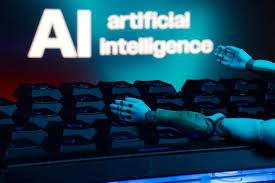
On Wednesday, Eisenkot posted an AI-generated birthday video on X mocking Netanyahu as he turned 77. The clip featured fictional characters, including a Hamas militant speaking from a tunnel and suggesting that Netanyahu had spent two decades protecting Israel.
The video appeared to allude to longstanding allegations that Netanyahu had deliberately allowed Hamas to remain in power in Gaza, a claim the prime minister has strongly denied.
Another AI-generated character resembling Iran’s Supreme Leader Mojtaba Khamenei then appeared, threatening to present Netanyahu with a bomb if he failed to secure victory in another round of conflict.
Netanyahu’s camp has also deployed AI-generated content against Eisenkot, fuelling controversy over the use of political satire and manipulated imagery.
In July, Netanyahu shared a video depicting Eisenkot rejecting an embrace from a young man wearing an Israel unity T-shirt before embracing Arab-Israeli politician Mansour Abbas.
The clip provoked outrage amid allegations that the young man resembled Eisenkot’s son, who was killed fighting in Gaza in 2023. Netanyahu’s party denied the claim.
Eisenkot later expressed deep contempt for Netanyahu and his associates over the video in an interview broadcast by Channel 13.
Netanyahu’s supporters have continued using AI-generated clips to warn against a possible opposition coalition involving Arab-Israeli parties. Some videos portray Jewish opposition politicians removing masks to reveal Arab-Israeli candidates, while others depict Arab figures looming over an apparently crumbling parliament.
Billboards promoting Netanyahu’s Likud party have also appeared with the slogan The Right or Palestine, alongside images of Arab-Israeli politicians, reinforcing the campaign’s divisive messaging.
Thair Abu Ras, head of the Forum for Regional Thinking at the Van Leer Jerusalem Institute, criticised what he described as incitement from Netanyahu’s camp, arguing that the messaging sought to portray participation by Arab parties in a governing coalition as illegitimate.
The campaign has also been marked by personal and potentially racialised insults against Eisenkot, whose family is of Moroccan Jewish origin.
Earlier this month, a senior commentator on the pro-Netanyahu Channel 14 television station described Eisenkot as a monkey. Although the term does not necessarily carry a racial meaning in Hebrew, the remark triggered widespread condemnation from opposition politicians and Netanyahu himself.
With the election approaching, the escalating exchanges underscore how AI-generated content, personal grievances and divisive rhetoric have become prominent features of Israel’s political battle, raising concerns about the tone of the campaign and the tactics being used to influence voters.