Iranian Foreign Minister Contradicts Supreme Leader, Admits ‘Serious’ Damage to Nuclear Sites

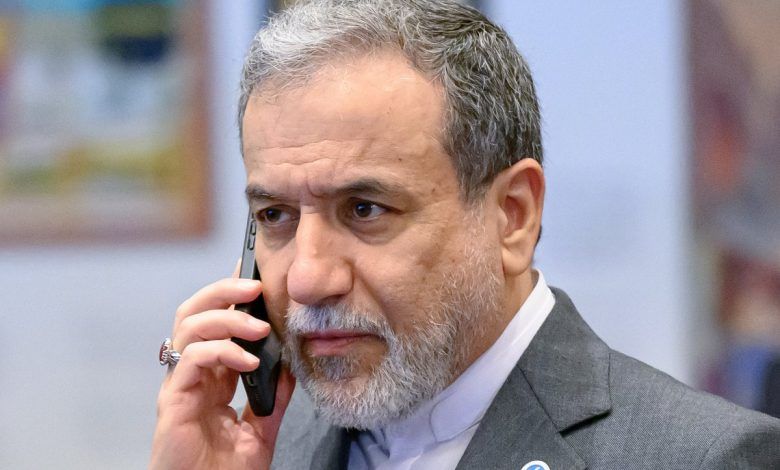
In a rare and revealing admission, Iran’s Foreign Minister Abbas Araghchi has confirmed that the country’s nuclear facilities suffered “excessive and serious” damage following a series of coordinated airstrikes by the United States and Israel — a stark contrast to the earlier dismissal from Iran’s Supreme Leader, Ayatollah Ali Khamenei.
Speaking on state television Thursday evening, Araghchi said that the Atomic Energy Organization of Iran is conducting a full-scale assessment of the damage sustained at several key nuclear facilities.
The acknowledgment appears to undercut official Iranian rhetoric and raises questions about the true extent of the impact from last week’s strikes on Fordo, Natanz, and Isfahan.
Just hours earlier, Ayatollah Khamenei claimed the bombings had achieved “nothing significant,” dismissing U.S. President Donald Trump’s assertion that the operation had “totally obliterated” three Iranian nuclear sites.
Khamenei, who has remained largely out of public view since the conflict with Israel escalated on June 13, accused Washington of exaggeration and declared symbolic victory over both the U.S. and Israel.
But Araghchi’s remarks suggest a much grimmer reality, painting a picture more aligned with assessments coming out of Western intelligence circles.
While CNN and several international outlets have highlighted U.S. claims that the attacks dealt a crippling blow to Iran’s nuclear ambitions — potentially setting the program back by years — a leaked preliminary Pentagon report suggests a more modest outcome, estimating only a few months’ delay. That report, which has been dismissed by the White House as speculative, further complicates the fog surrounding the true consequences of the strikes.
Iran’s internal posture is shifting rapidly. Araghchi confirmed that Tehran has no intention of resuming nuclear talks with the U.S., which were already suspended following Israel’s initial offensive.
He hinted at a new diplomatic approach but declined to elaborate, stating only that Iran’s strategy will now reflect “the interests of the Iranian people.”
In parallel, the Iranian parliament has approved a bill to halt cooperation with the International Atomic Energy Agency (IAEA), potentially ending international inspections of its nuclear sites — a move that could unravel the remaining threads of nuclear transparency.
Meanwhile, in what appears to be a bid to entice Iran back to the negotiating table, the Trump administration has floated a proposal that would ease sanctions and unlock up to $30 billion in frozen assets to support a civilian nuclear program.
However, with political hardliners gaining ground in Tehran and trust at an all-time low, the path to renewed diplomacy looks increasingly fraught.
Israel has justified its preemptive strikes by pointing to what it alleges are covert Iranian efforts to develop nuclear weapons — a claim Tehran has consistently denied, maintaining its program is strictly for civilian energy production.
The cost of the escalating conflict has been devastating: Iran’s Health Ministry reports 610 people killed in 12 days of Israeli airstrikes, while Israeli authorities report 28 fatalities on their side.
Despite international calls for de-escalation, the region remains on edge, with diplomacy hanging by a thread and narratives diverging sharply — even within Iran’s own leadership.