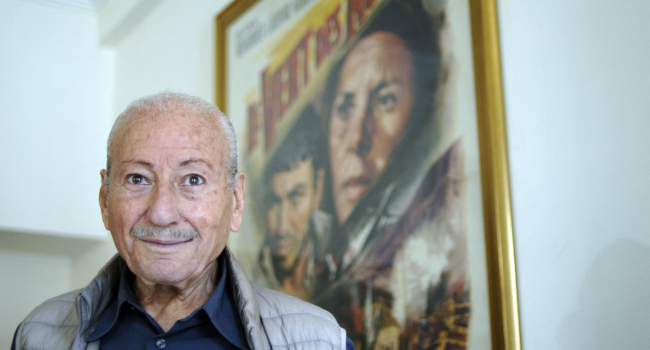
Mohammed Lakhdar-Hamina, the legendary Algerian filmmaker and the first Arab and African director to win the prestigious Palme d’Or at the Cannes Film Festival, has died at the age of 95, his family confirmed on Friday. He passed away peacefully at his home in Algiers.
Lakhdar-Hamina etched his name in cinematic history in 1975 when his powerful anti-colonial epic, Chronicle of the Years of Fire, took home the top prize at Cannes. The six-part historical drama chronicled Algeria’s turbulent journey to independence from French colonial rule, weaving personal stories with national struggle — a narrative both intimate and sweeping in scope.
Born February 26, 1930, in M’Sila, in the heart of the Aures Mountains, Lakhdar-Hamina came from humble beginnings. The son of peasant farmers, he would go on to become a revolutionary voice in African and Arab cinema. His career was shaped as much by artistry as by politics: during the Algerian War of Independence, his father was tortured and killed by French forces. In 1958, Lakhdar-Hamina himself joined the resistance movement, based in Tunis.
He trained in cinema informally, first through internships with Tunisian newsreels and later by directing short films, honing a visual language that would challenge colonial narratives and celebrate Algerian identity.
He made his Cannes debut in 1967 with The Winds of the Aures, which won the Best First Work award, announcing him as a formidable talent. Over the years, he would compete at Cannes four times, becoming a respected figure on the global stage and a pioneer for filmmakers across the Global South.
With his passing, Lakhdar-Hamina was the oldest living recipient of the Palme d’Or — a distinction that underscored the enduring relevance of his legacy.
He is survived by his wife and four sons.
International tributes have poured in from the film community, with many calling him a “father of African cinema” and a “courageous voice for decolonization through art.” Film historians often cite Chronicle of the Years of Fire as a landmark in post-colonial cinema and a precursor to later resistance-driven storytelling from the Global South.