Federal Government Unveils Katsina State Smart Secondary School in Commitment to Modern Education

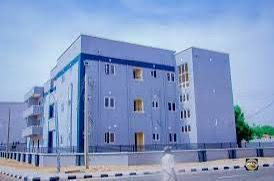
The Federal Government has once again demonstrated its dedication to fostering a future-ready and globally competitive education system with the official commissioning of the Katsina State Smart Secondary School on Tuesday.
Ikharo Attah, the Special Adviser (Media and Communications) to the Honourable Minister Of Education revealed this in a Statement today Tuesday in Abuja.
The event was attended by the Honourable Minister of Education, Dr. Maruf Tunji Alausa, CON, and the Executive Governor of Katsina State, Mallam Dikko Umaru Radda.*
During the commissioning, Dr. Alausa described the Smart School initiative as a significant milestone in educational development. He emphasized that this project transcends mere infrastructure; it symbolizes innovation, opportunity, and a strategic investment in human capital aimed at equipping Nigerian students for a technology-driven global economy.
The Minister praised Governor Radda’s leadership and highlighted the progress under the Build-Your-Future Blueprint, which demonstrates Katsina’s commitment to expanding access, enhancing infrastructure, and developing the teaching workforce. He noted that these efforts align with the Renewed Hope Agenda of President Bola Ahmed Tinubu, GCFR, and are integral to the broader Nigerian Education Sector Renewal Initiative (NESRI).
This initiative focuses on improving access, strengthening STEMM (Science, Technology, Engineering, Mathematics, and Multimedia), enhancing Technical and Vocational Education and Training (TVET), upgrading infrastructure, promoting inclusive education, and advancing digital governance.
Dr. Alausa also shared some key achievements, revealing that over ₦106 billion in Universal Basic Education Commission (UBEC) matching grants have been accessed by various states in the past 18 months.
Additionally, more than ₦22 billion has been invested in teacher development, ₦2.035 billion directed to School-Based Management Committees, and over 10,000 classrooms have been renovated. Furthermore, 978,000 teachers have received training, and more than 7.8 million textbooks have been distributed across the nation.
The revised Primary Education Curriculum is currently being implemented nationwide, and a new Secondary Education Curriculum is set to launch in the upcoming academic session. Funding for the HOPE Education Programme has also been secured to improve access, quality, and institutional capacity in education.
In terms of skills development, Dr. Alausa highlighted that over 160,000 youths are presently receiving training in more than 1,200 TVET centers nationwide, with over 1 million applications submitted in the latest recruitment phase, indicating a robust national demand for skills-based education.
Additionally, he discussed important digital reforms, such as the deployment of a cloud-based Annual School Census and the introduction of the Learner Identification Number (LIN), which aim to enhance data-driven planning, transparency, and accountability in the education sector.
He noted that the Katsinap Smart Secondary School stands as a national model for smart education and a catalyst for transformative change, assuring continued Federal Government support to states in delivering modern, high-quality education for all Nigerians.
In his speech, Katsina State Governor, Dikko Umaru Radda, said his administration decided to embark on the smart model secondary school construction because “ we believe that the government that neglect the schooling of its children has failed at the most fundamental duty, regardless of whatever else it builds.”
He added that his administration Will not rest until every zone in the state has access to the same high standard of education.
The governor pointed out that Since his administration assumed office in 2020, it has prosecuted revolutionary programmes in the education sector of the state.
This initiative marks a significant step forward in Nigeria’s pursuit of educational excellence and innovation, aiming to empower its youth for the challenges of a rapidly evolving global landscape.