
Healthcare providers in Nigeria have called for urgent reforms to the country’s health insurance system, warning that millions of Nigerians remain exposed to high medical costs despite increasing enrolment.
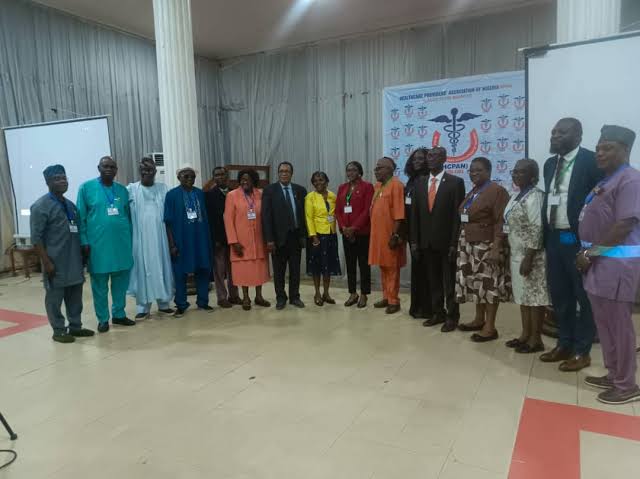
The call was made at the 2026 Annual Scientific Conference and Annual General Meeting of the Healthcare Providers’ Association of Nigeria, HCPAN, Lagos State chapter, held at the Lagos Chamber of Commerce and Industry building.
The conference, themed “Expanding Health Insurance Coverage in Nigeria: Improving Community-based Insurance Schemes in the Informal Sector,” focused on strategies to extend affordable coverage to traders, artisans, transport workers and small business owners.
Delivering the keynote address on behalf of the Chief Executive Officer of Drugstoc Limited, Dr Chibuzo Opara, the company’s Head of Business, Damilare Ojo, said health insurance should be measured by the quality-of-care beneficiaries receive, rather than enrolment figures alone.
Ojo disclosed that enrolment had risen to about 22 million people, representing less than 10 per cent of Nigeria’s population, while out-of-pocket payments accounted for more than 71 per cent of healthcare spending.
He called for flexible contribution plans that reflect the irregular earnings of informal sector workers, alongside clearer information on insurance benefits and stronger enrolment arrangements through trusted community associations.
Ojo also urged the integration of community pharmacies into health insurance networks, noting that they serve as accessible points of contact for many Nigerians seeking treatment for common health conditions.
He stressed that pharmacies should work alongside other healthcare professionals within coordinated referral systems.
The Drugstoc representative further called for timely reimbursement of healthcare providers, warning that payment delays of 60 to 90 days could undermine their ability to maintain services and restock essential medicines.
Similarly, the Lagos Zonal Director of the National Health Insurance Authority, Femi Adeoye, represented by Chinenye Nwaohiri, described health insurance as a critical social protection tool for reducing the financial burden of medical treatment.
He said many uninsured families delay or abandon treatment because of the cost, adding that sustainable financing, broader provider participation and improved service quality were necessary to expand access.
The President of HCPAN, Dr Austin Aipoh, called for a fresh actuarial study to determine the actual cost of healthcare delivery, taking into account rising expenses for medicines, electricity and facility operations.
Aipoh also urged the government to increase healthcare funding and review provider reimbursement rates to reflect current economic realities.
The outgoing Chairman of HCPAN’s Lagos State chapter, Pharm. Biola Paul-Ozieh, said Nigeria’s health insurance coverage remained inadequate despite the mandatory insurance provisions of the National Health Insurance Authority Act of 2022.
She identified delayed payments, inadequate tariffs and the exclusion of some healthcare professionals from insurance networks as major challenges, urging stakeholders to develop innovative community-based schemes to extend coverage to vulnerable Nigerians and informal sector workers.
The healthcare providers called for stronger collaboration among government agencies, insurers, regulators and frontline professionals to ensure that expanded insurance coverage translates into affordable, accessible and quality healthcare for Nigerians.